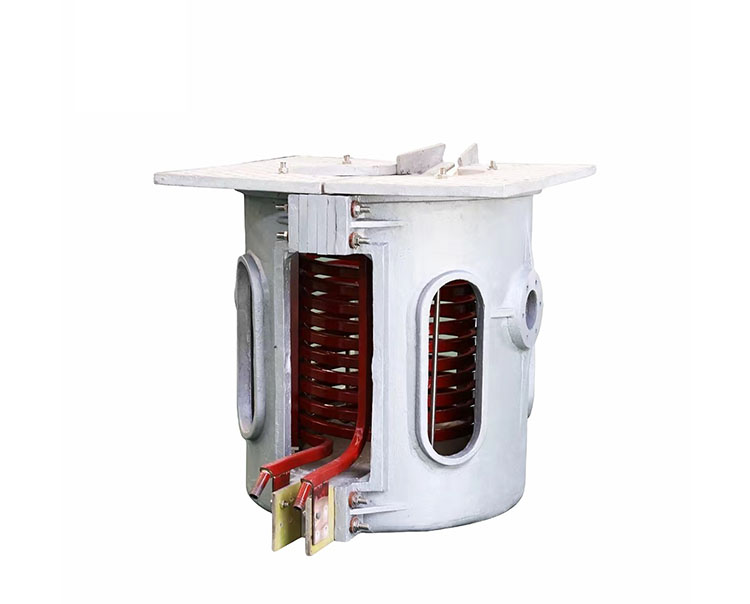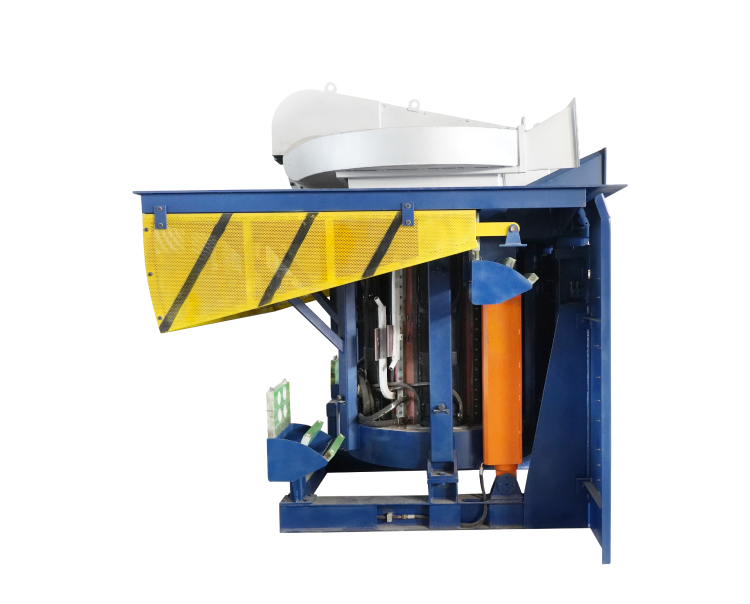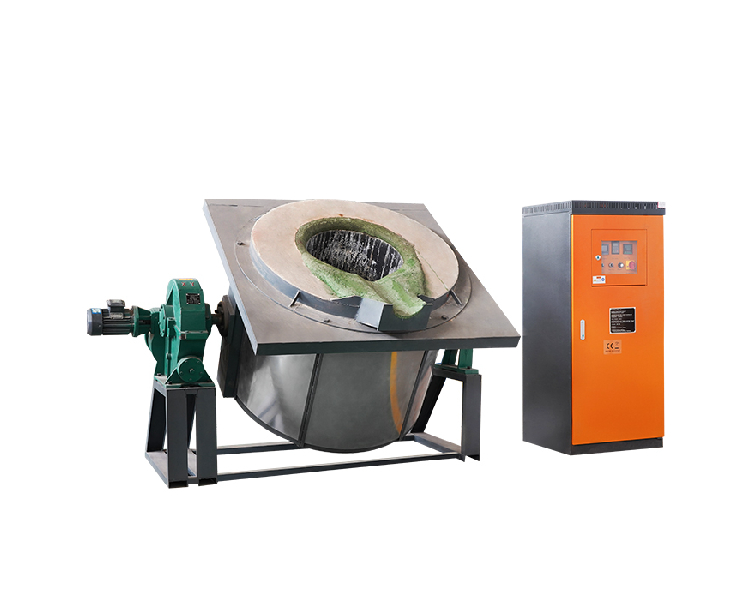
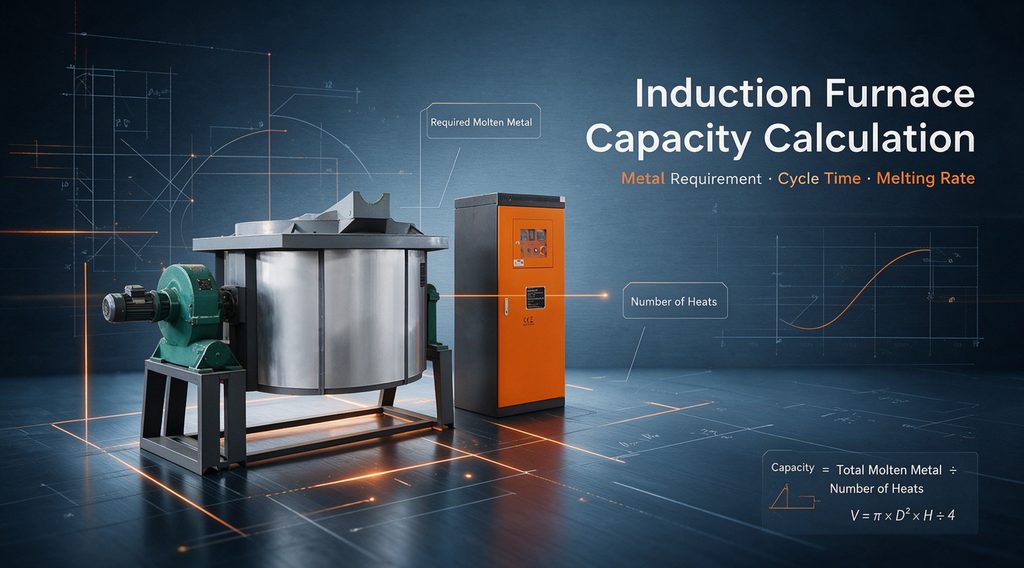
Calculating induction furnace capacity starts with the amount of metal required per production cycle, the available production time, and the complete melting cycle. Choosing a furnace based only on its nominal tonnage can lead to production delays or unnecessary investment.
To calculate the required capacity, you need to determine the molten-metal requirement, estimate how many complete heats can be processed, and verify that the furnace’s rated power and melting rate can meet the production target.
1. Understand the Difference Between Furnace Capacity and Melting Rate
Before calculating induction furnace capacity, distinguish these three specifications:
| Parameter | Meaning | Unit |
|---|---|---|
| Rated furnace capacity | Manufacturer-specified capacity per heat under defined conditions | kg/heat or t/heat |
| Melting rate | Amount of metal melted per unit of time | kg/h or t/h |
| Rated power | Electrical power supplied to the furnace system | kW |
These values are related but not interchangeable. A furnace rated at 1 ton does not necessarily melt 1 ton of metal every hour. Its actual production rate depends on the power configuration, metal type, charge condition, target temperature, and complete operating cycle.
When comparing an induction melting furnace, confirm whether the manufacturer’s rated capacity refers to the charged metal mass or usable molten-metal quantity, and which metal is used as the reference.
2. Calculate the Required Molten-Metal Quantity
Start with the actual production target. If the target is finished castings rather than molten metal, account for the overall metal yield.
The formula is:
Required molten metal = Required finished output ÷ Metal yield
For example, suppose a foundry needs to produce 4.8 tons of finished castings per shift and its overall yield, measured from the molten-metal input to accepted castings, is 80%.
Required molten metal:
4.8 ÷ 0.80 = 6 tons
The furnace must therefore supply approximately 6 tons of molten metal during the shift.
The 80% yield in this example is an assumption, not a universal foundry value. Use your actual production data. If your yield calculation excludes melting losses, account for those losses separately without counting them twice.
If your production target is already expressed as the required molten-metal quantity, you can skip this conversion.
3. Calculate the Required Induction Furnace Capacity
Once the required molten-metal quantity is known, determine how many complete heats the furnace can process during the available production time.
The estimated number of heats is:
Number of heats = Available production time ÷ Complete cycle time
Use the same time unit for both values. For a single shift, count only the complete heats that can realistically fit into the available schedule.
The complete cycle should include charging, melting, reaching the required temperature, tapping, and the time needed to prepare for the next heat. If some operations occur simultaneously, use the actual production schedule rather than simply adding their individual durations.
The usable metal requirement per heat is then:
Required usable capacity per heat = Total molten-metal requirement ÷ Number of heats
Calculation example
Assume the following production conditions:
| Parameter | Assumed value |
|---|---|
| Finished casting output | 4.8 tons/shift |
| Overall metal yield | 80% |
| Required molten metal | 6 tons/shift |
| Available production time | 6 hours |
| Complete cycle time | 60 minutes |
| Number of complete heats | 6 |
The required usable molten-metal quantity per heat is:
6 tons ÷ 6 heats = 1 ton per heat
The average production rate required is:
6 tons ÷ 6 hours = 1 ton per hour
The preliminary requirement is therefore approximately 1 ton of usable molten metal per heat, at an average production rate of 1 ton per hour.
This result does not automatically mean that a furnace carrying a nominal 1-ton rating will meet the target. The manufacturer must confirm the rated-capacity definition, allowable operating level, expected melting rate, and actual cycle time for the selected metal.
If the complete cycle increases to 90 minutes while the available production time remains 6 hours, only four complete heats fit into the shift. Supplying the same 6 tons would then require an average of 1.5 tons of usable molten metal per heat. The proposed furnace must also have enough melting capacity and power to deliver that quantity within the required cycle.
This is why induction furnace capacity calculation should always consider both batch size and production scheduling.
4. Check the Furnace Dimensions If You Need a Volume-Based Estimate
If the internal dimensions of a crucible are available, its approximate geometric volume can provide a preliminary check of its capacity.
For a cylindrical melting chamber:
V = π × D² × H ÷ 4
Where:
- V = usable volume, m³
- D = internal diameter, m
- H = usable molten-metal height, m
The estimated metal mass is:
Metal mass ≈ Usable volume × Molten-metal density
When volume is expressed in cubic metres and density in kg/m³, the result is in kilograms.
Use the actual usable metal height rather than the full internal height. Freeboard, refractory lining, crucible taper, and the manufacturer’s operating limits can all reduce the available molten-metal volume. The density must also correspond to the relevant metal or alloy and its operating temperature.
This method is only a geometric estimate. For a production specification, the manufacturer’s rated capacity and operating limits should take precedence over calculations based on internal dimensions alone.
5. Verify the Required Melting Rate and Power
Calculating the required capacity is only the first part of selecting an induction furnace. The proposed equipment must also meet the required melting rate.
Check the following parameters before choosing a model:
| Parameter | What to verify |
|---|---|
| Metal type | Steel, stainless steel, cast iron, copper, and aluminum have different melting requirements |
| Rated capacity | Confirm the rated metal, capacity basis, and usable quantity per heat |
| Rated power | Ensure the configuration can achieve the required melting rate |
| Complete cycle time | Include charging, melting, temperature adjustment, tapping, and turnaround |
| Target temperature | Confirm the required tapping or casting temperature |
| Charge condition | Consider scrap size, bulk density, cleanliness, and charging method |
| Factory utilities | Check available electrical supply and cooling-water requirements |
Rated power alone does not determine production output. Two furnaces with the same nominal capacity can have different melting rates because their power configurations, charge materials, and operating conditions differ.
For a broader explanation of how power, operating conditions, and electricity consumption influence production performance, see our induction furnace efficiency guide.
For steel-specific operating conditions, refer to Induction Furnace for Steel Melting. You can also explore our industrial induction furnace solutions for different production applications.
6. Common Mistakes in Induction Furnace Capacity Calculation
Several mistakes can make a capacity estimate misleading.
- Confusing tons per heat with tons per hour. Furnace capacity indicates the quantity handled per heat, while melting rate describes output over time.
- Ignoring metal yield. Finished casting weight may be lower than the molten-metal requirement. Use the actual yield relevant to the production process.
- Using melting time instead of the complete cycle time. Charging, tapping, and preparation for the next heat also affect the number of batches a furnace can process.
- Assuming nominal capacity guarantees the required output. Actual throughput must be checked against rated power, melting-rate data, and operating conditions.
- Applying the same capacity allowance to every project. Any extra capacity should reflect the required batch size, production variability, and realistic future demand rather than an arbitrary percentage.
Frequently Asked Questions
How do you calculate induction furnace capacity in tons?
First calculate the required molten-metal quantity. Then divide it by the number of complete heats that can be processed within the available production time. The result is the required usable metal quantity per heat, which must be checked against the manufacturer’s rated-capacity specification.
Does a 1-ton induction furnace melt 1 ton per hour?
Not necessarily. One ton may refer to the rated capacity per heat. The hourly melting rate depends on rated power, metal type, charge condition, target temperature, and the complete operating cycle.
How does furnace power affect melting capacity?
Rated power influences how quickly the furnace can supply energy to melt the charge. However, power alone is insufficient to determine the actual melting rate. The manufacturer’s expected performance must be checked for the specific metal and operating conditions.
What information is needed to calculate the correct furnace size?
The main inputs are the metal type, required molten-metal quantity or finished output, actual metal yield, available production hours, complete cycle time, target temperature, and required hourly output. Available electrical power and cooling-water conditions should also be checked before confirming the configuration.
Conclusion
To calculate induction furnace capacity accurately, start with the required molten-metal quantity, determine how many complete heats fit into the production schedule, and calculate the usable metal requirement per heat. Then verify the rated capacity, power configuration, melting rate, and cycle time against the actual operating conditions.
For a new installation or capacity upgrade, MeltingTech can evaluate these production requirements and help determine a suitable induction melting furnace configuration.
When requesting a recommendation, provide your metal type, target output, production hours, complete cycle time, and available electrical supply. These details give the engineering team a more reliable basis for assessing furnace capacity and expected production performance.