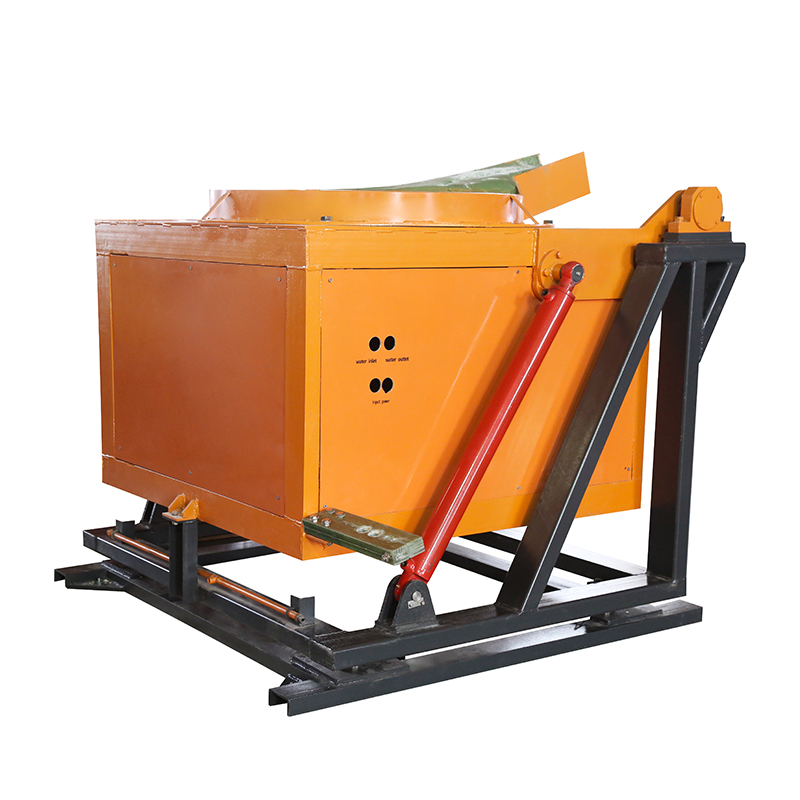
For metal foundries, even a small improvement in energy performance can have a major impact on annual operating costs. A 5% improvement in induction furnace efficiency can potentially save thousands of dollars each year, especially in plants running multiple furnaces or high-volume melting schedules.
As electricity prices, production costs, and environmental requirements continue to increase, furnace efficiency has become one of the most important factors when selecting and operating an induction furnace. It does not only determine how much electricity is consumed. It also affects melting speed, production capacity, cost per ton, and overall equipment performance.
In this guide, we explain how induction furnace energy efficiency works, what thermal efficiency means, how much electricity different furnaces typically consume, and how induction furnaces compare with gas furnaces. We will also cover the main disadvantages of induction furnaces, five practical ways to improve efficiency, and how to calculate furnace efficiency using real production data.
What Is Induction Furnace Efficiency?
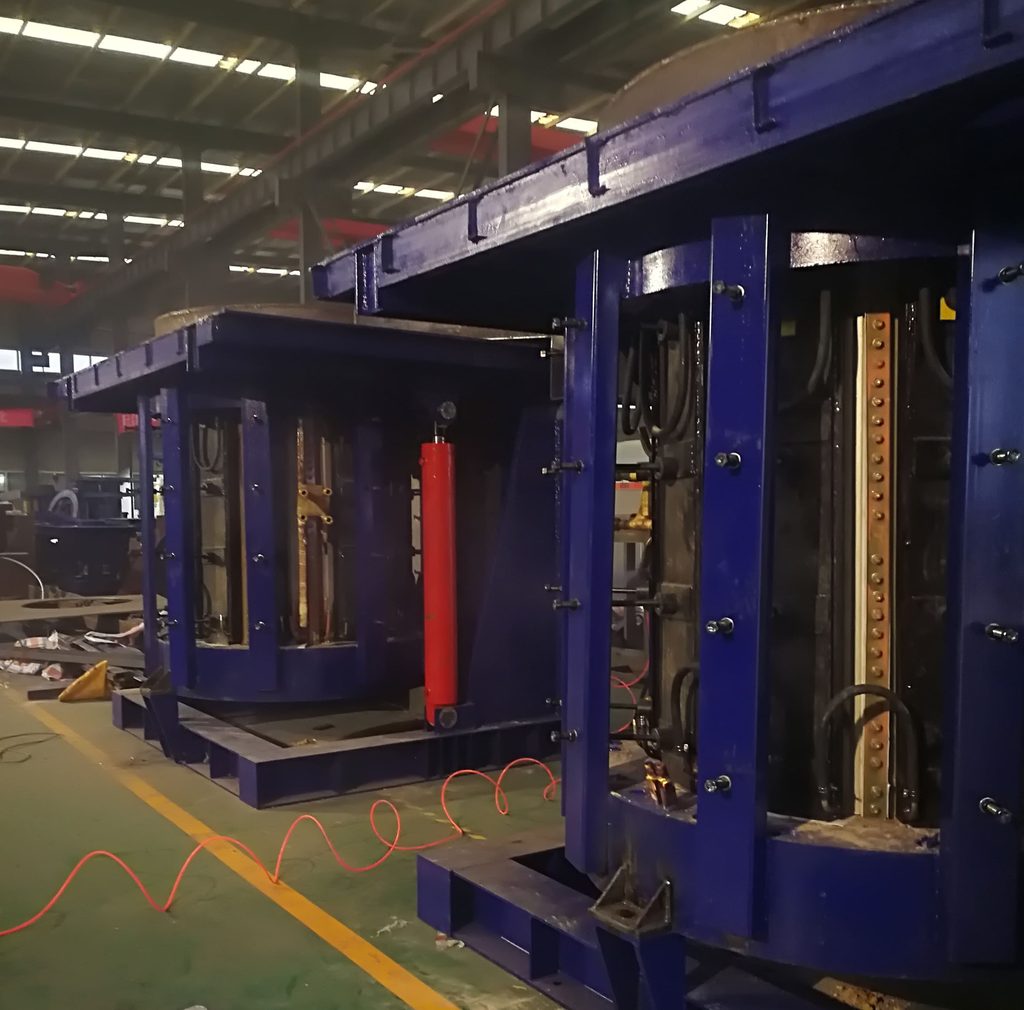
Induction furnace efficiency refers to how effectively an induction furnace converts input electrical energy into useful thermal energy for melting metal.
In simple terms:
Induction furnace efficiency = Useful heat transferred to the metal ÷ Total electrical energy input × 100%
However, furnace efficiency can be evaluated in two different ways: thermal efficiency and total efficiency.
Thermal Efficiency
Thermal efficiency describes the percentage of electrical energy that is successfully converted into useful heat inside the metal charge.
For example, if a furnace receives 100 units of electrical energy and approximately 80 units are transferred to the metal, the thermal efficiency is 80%.
Losses can occur through:
- Furnace wall and refractory heat losses
- Coil losses
- Electrical conversion losses
- Radiation and heat dissipation
- Cooling system losses
Total Efficiency
Total efficiency considers the complete energy consumption of the melting system rather than only the heat transferred into the metal.
This can include auxiliary equipment such as:
- Cooling water systems
- Power supplies
- Control cabinets
- Hydraulic systems
- Fans and pumps
- Other supporting equipment
This distinction is important when comparing different furnace installations. A furnace may have good thermal efficiency, but its overall energy efficiency can still be reduced by inefficient cooling systems, poor operating practices, or unnecessary standby time.
Energy can represent a significant portion of the total operating cost of a foundry, in some cases accounting for around 30%-50% of melting-related operating expenses. Improving efficiency therefore directly reduces energy cost per ton, while also helping increase production output and reduce unnecessary thermal stress on furnace components.
How Efficient Is an Induction Furnace?
A typical induction furnace can achieve approximately 70%-85% thermal efficiency, although actual performance varies depending on the metal being melted, furnace size, power supply, operating conditions, and equipment design.
A well-designed furnace operating under optimized conditions can perform toward the upper end of this range. Older equipment, poor furnace loading practices, unsuitable capacity, or incorrect operating parameters can result in lower efficiency.
Four factors have a particularly strong influence on performance.
1. Melting Frequency
Operating frequency determines how electromagnetic energy interacts with the metal charge. High-frequency systems are generally suited to smaller loads and certain heating applications, while medium-frequency systems are widely used for industrial melting.
The frequency must match the furnace size, coil design, and application.
2. Furnace Capacity
Induction furnace capacity has a direct effect on energy efficiency. A furnace that is significantly oversized for the production batch may consume unnecessary energy because more refractory material and furnace structure must be heated and maintained.
At the same time, an undersized furnace may need to operate close to its limits, creating production and efficiency problems.
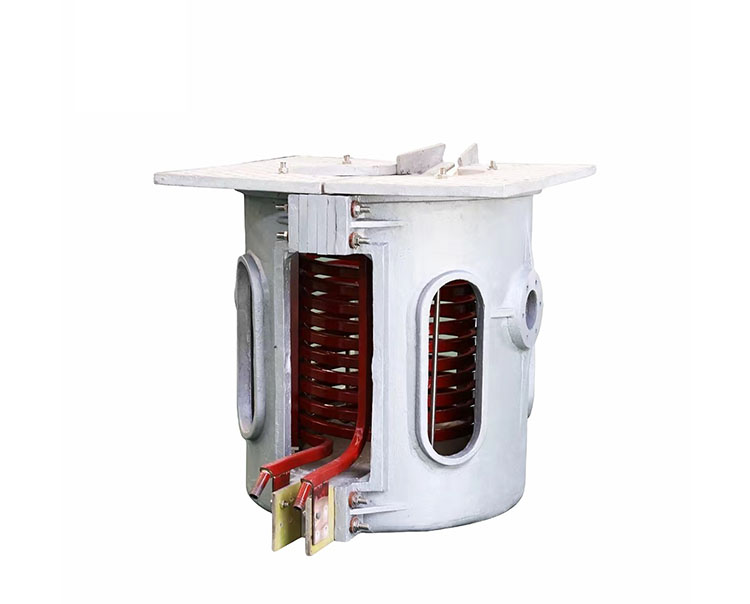
3. Coil Design
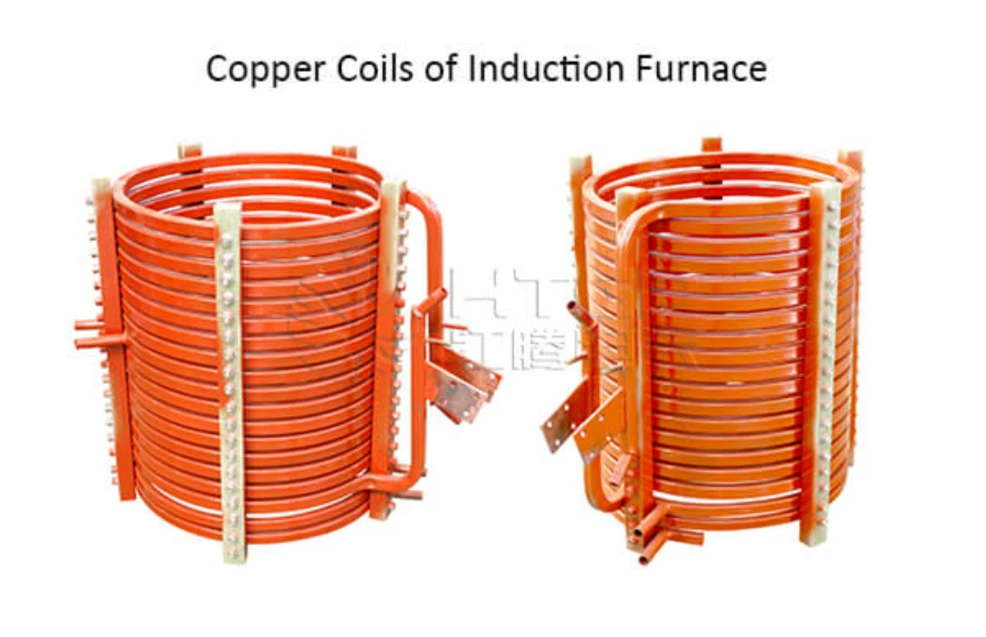
The induction coil determines how efficiently electromagnetic energy is transferred to the charge. Coil diameter, number of turns, spacing, and the distance between the coil and crucible all affect magnetic coupling.
A properly designed coil helps create a more uniform electromagnetic field and improves energy transfer.
4. Refractory Lining
The refractory lining must withstand high temperatures while minimizing unnecessary heat loss. A lining that is too thin can increase heat losses and reduce service life, while an excessively thick lining can increase thermal mass and slow heating.
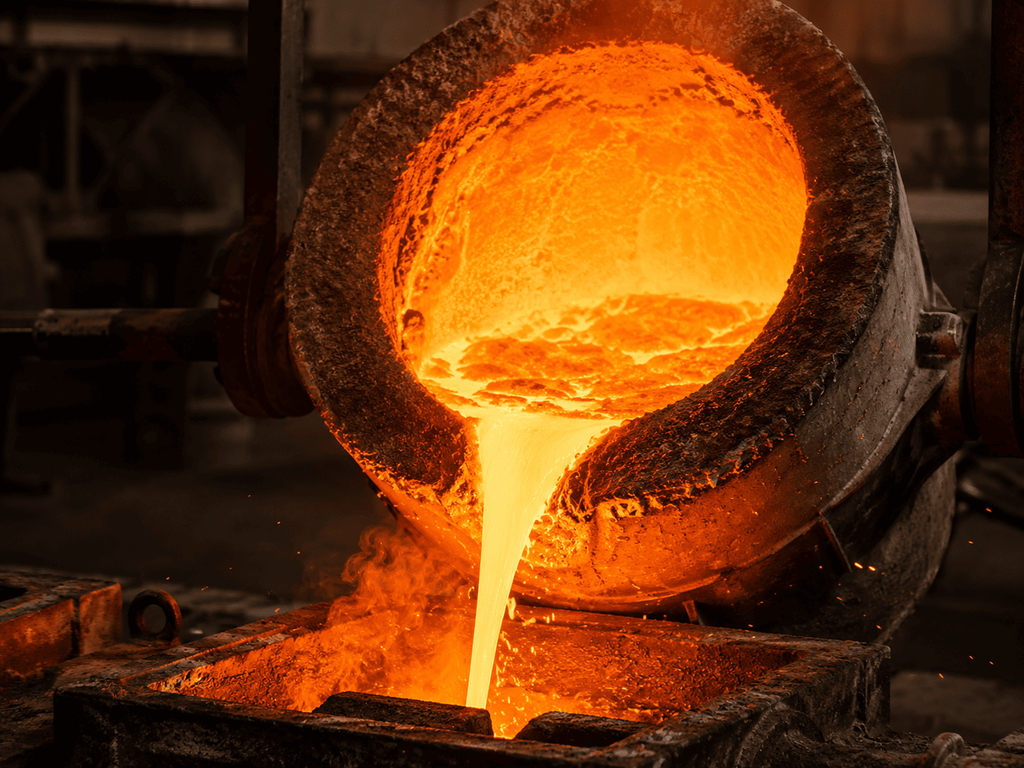
The following figures provide a useful reference for typical operating ranges:
| Metal | Typical Capacity | Typical Thermal Efficiency | Typical kWh/ton |
|---|---|---|---|
| Steel / Iron | 0.5-5 ton | 70%-80% | 550-750 |
| Aluminum | 0.5-10 ton | 75%-85% | 450-600 |
| Copper | 0.5-3 ton | 72%-82% | 350-500 |
| Brass | 0.5-5 ton | 73%-83% | 400-550 |
These figures should be treated as typical reference ranges rather than guaranteed equipment specifications. Actual energy consumption depends on furnace design, starting temperature, charge condition, target temperature, cycle time, and operating practices.
Induction Furnace Power Consumption Explained
Induction furnace power consumption depends mainly on furnace capacity, metal type, melting temperature, furnace design, and production cycle.
The rated power of the furnace determines how quickly energy can be supplied. However, rated power and actual energy consumption are not the same thing. A 500 kW furnace does not necessarily consume 500 kWh per ton because the furnace may operate at different power levels throughout the production cycle.
Typical power ranges include:
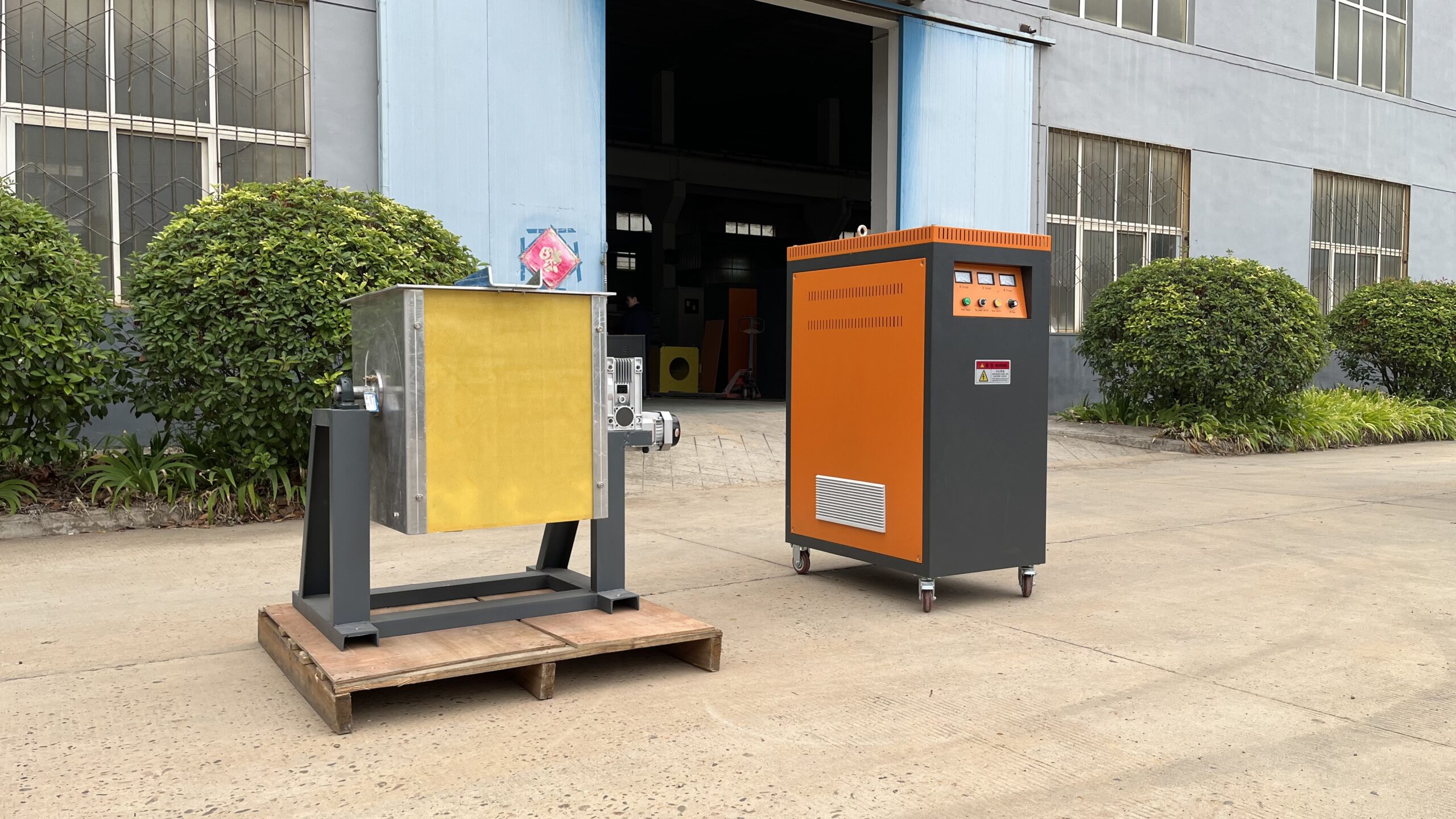
- Small furnaces, around 100-500 kg: 50-200 kW
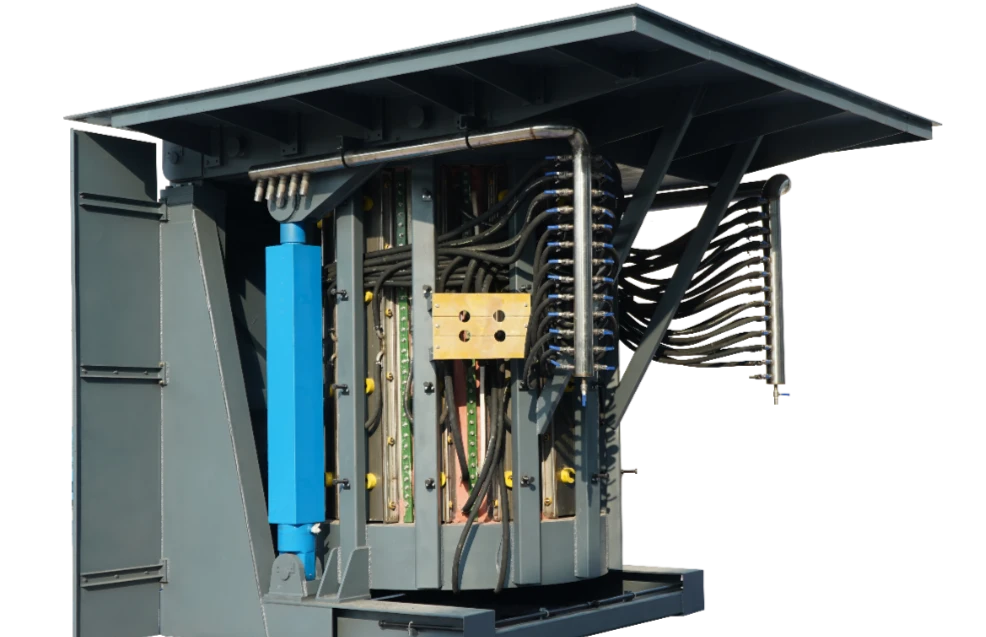
- Medium furnaces, around 1-5 tons: 300-1,500 kW
- Large furnaces, 10 tons and above: 2,000-5,000+ kW
Melting Stage vs Holding Stage
The melting cycle normally contains two distinct energy-use stages.
During the melting stage, the furnace operates at high power to rapidly bring the charge to melting temperature. Although electricity consumption is high during this stage, the energy is being used productively and the furnace generally operates efficiently.
During the holding stage, the required power is much lower, but the furnace may continue consuming electricity for a relatively long period. In poorly organized production, holding and standby operation can represent a significant share of total energy consumption.
This is why reducing unnecessary holding time is one of the simplest ways to lower induction furnace power consumption.
Typical reference values are shown below:
| Furnace Capacity | Rated Power | Typical Melting Time | Typical Energy Consumption |
| 500 kg | 250 kW | 45-60 min | 600-750 kWh/ton |
| 1 ton | 500 kW | 50-70 min | 550-700 kWh/ton |
| 3 ton | 1,500 kW | 60-80 min | 500-650 kWh/ton |
| 5 ton | 2,500 kW | 70-90 min | 480-620 kWh/ton |
Energy consumption is usually measured in kWh per ton or kWh per kg. To obtain meaningful results, operators should monitor actual electricity consumption rather than relying only on the furnace’s rated power.
Charge composition also matters. Clean, dry, properly sized material generally melts more efficiently than contaminated, oversized, or poorly prepared charge material.
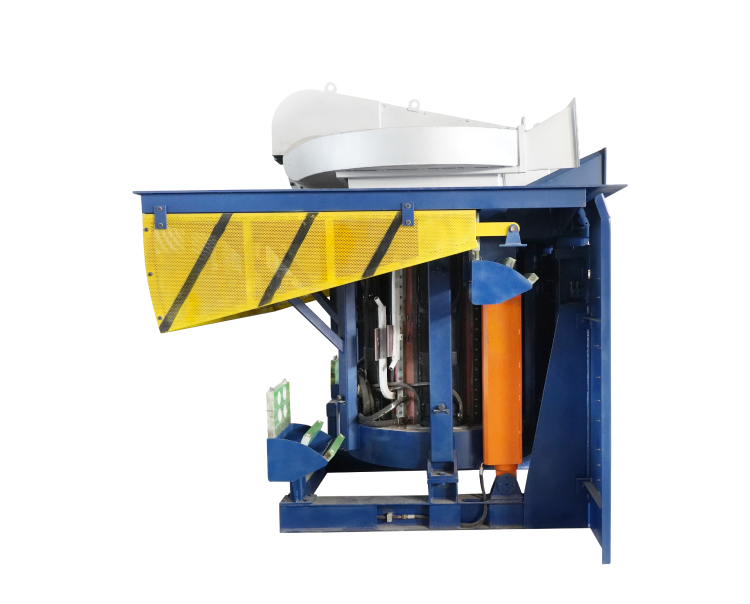
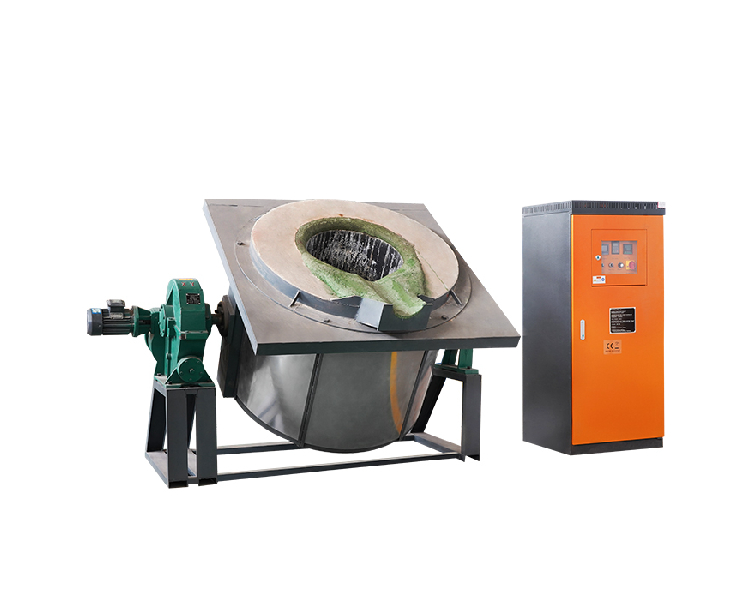
For plants looking to improve production efficiency, selecting a properly matched high-efficiency induction melting furnace can significantly influence both melting speed and long-term electricity consumption.
Induction Furnace vs Gas Furnace Efficiency
When comparing induction furnace vs gas furnace efficiency, thermal efficiency is one of the most important differences.
Induction furnaces can typically achieve around 75%-85% thermal efficiency, while conventional gas or fuel-fired furnaces may operate around 30%-50%, depending on furnace design, burner efficiency, insulation, exhaust losses, and operating conditions.
The main reason is how heat is generated.
An induction furnace generates electromagnetic energy that produces heat directly within the conductive metal. A gas furnace first produces heat through combustion and then transfers that heat to the metal. Some energy inevitably leaves through exhaust gases and furnace surfaces.
However, efficiency is not the only consideration.
Energy Cost
An induction furnace uses electricity, while a gas furnace depends on natural gas or another fuel. The final operating cost depends heavily on local electricity and gas prices.
Maintenance Cost
Induction systems require maintenance of components such as coils, refractories, power supplies, and cooling systems. Gas systems may require maintenance of burners, valves, heat exchangers, exhaust systems, and combustion controls.
Environmental Considerations
Induction melting produces no direct combustion exhaust at the furnace itself, while gas-fired equipment produces flue gases that may require appropriate ventilation and emission controls.
Automation and Control
Induction systems can provide precise power and temperature control, which makes them attractive for applications requiring repeatable melting conditions and multiple grades of metal.
An induction furnace is often a strong choice when temperature control, cleaner operation, automation, and flexible batch production are important. Gas furnaces can remain attractive where natural gas is inexpensive, very large continuous production is required, or initial equipment investment is the primary concern.
A direct equipment or application comparison can help determine whether an induction furnace vs gas furnace efficiency comparison should be based on thermal performance alone or on the complete production cost.
What Are the Downsides of an Induction Furnace?
Although induction furnaces offer excellent control and energy performance, they are not without disadvantages. Understanding the main induction furnace downsides helps buyers choose the right system and plan their production process more effectively.
1. Higher Initial Investment
An induction furnace typically requires more than the furnace body itself. The complete system may include a power supply, cooling system, capacitors, control system, and other electrical components.
As a result, the initial investment can be higher than that of some conventional gas-fired systems.
The main advantage is lower and more controllable operating costs over the equipment’s service life. In applications with sufficient production volume and favorable electricity pricing, the additional investment can potentially be recovered through energy and labor savings.
For a detailed breakdown of equipment pricing, see our guide on how much an induction furnace costs.
2. Charge Size and Shape Requirements
Induction furnaces perform best when the charge material is prepared correctly.
Very small, loose, or irregular scrap can reduce charging efficiency and may require compacting or bundling. Extremely large pieces can also create loading difficulties and increase melting time.
Proper charge preparation improves furnace utilization and helps maintain stable electromagnetic coupling.
3. Holding Energy Consumption
One common weakness is energy consumption during extended holding periods.
The furnace still needs electrical power to maintain the molten metal at the target temperature. This can become particularly inefficient for small furnaces operating with long idle periods.
The best solution is to synchronize melting, casting, and downstream production as closely as possible.
4. Harmonics and Power Factor
Modern medium-frequency induction power supplies may introduce harmonics into the electrical system, while power factor may also require correction.
Proper electrical design can address these issues through power-factor compensation and harmonic filtering. A correctly engineered system should consider the plant’s electrical infrastructure rather than treating the furnace as an isolated piece of equipment.
5. Higher Technical Requirements
Induction furnaces require trained personnel for refractory installation, coil inspection, electrical maintenance, cooling-system management, and process control.
Routine inspections are especially important because coil insulation, refractory wear, water leakage, and electrical faults can affect both efficiency and safety.
5 Ways to Improve Induction Furnace Efficiency
Improving furnace efficiency does not always require replacing the entire system. In many plants, the largest improvements come from correcting equipment configuration and operating practices.
Here are five practical ways to improve induction furnace efficiency.
Optimize Induction Furnace Coil Design
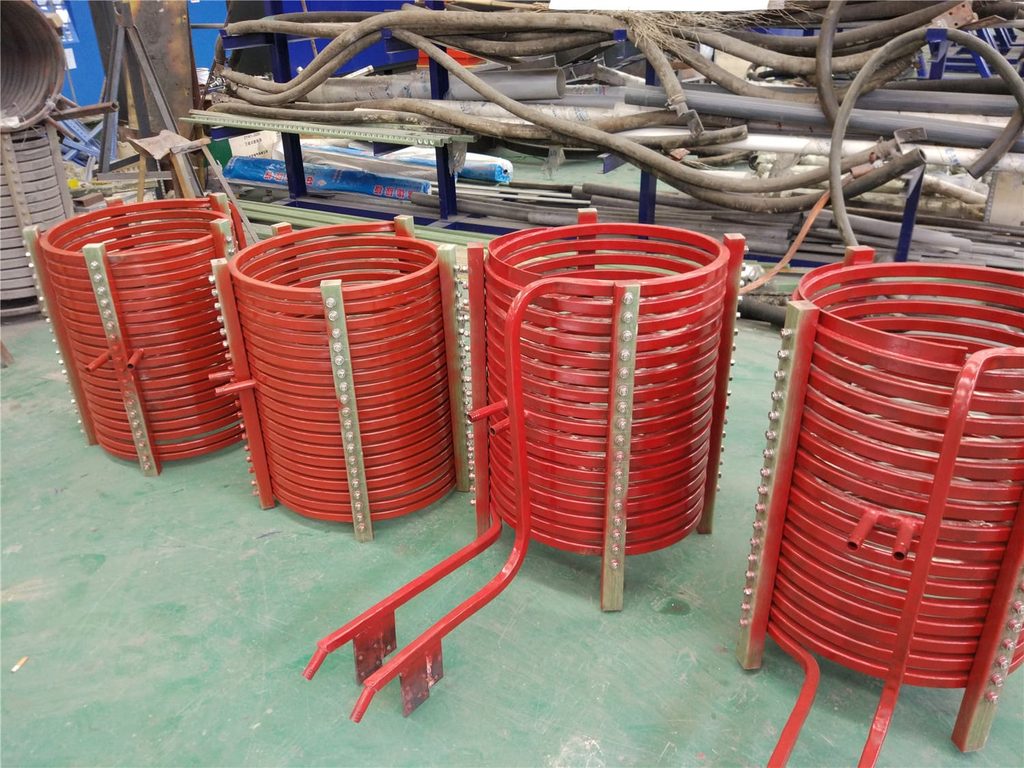
Induction furnace coil design directly affects magnetic coupling between the coil and the metal charge.
The number of coil turns, coil diameter, spacing, and distance from the crucible all influence the electromagnetic field. If the gap between the coil and furnace lining is unnecessarily large, energy transfer can become less effective.
The coil should be designed according to:
- Furnace dimensions
- Metal type
- Charge volume
- Required melting rate
- Refractory thickness
- Operating frequency
A coil that is properly matched to the power supply can provide more uniform energy transfer and reduce unnecessary electrical losses.
In optimized applications, coil improvements may contribute to an efficiency improvement of approximately 2%-5%, although the actual result depends on the original furnace condition.
Choose the Right Furnace Capacity
Choosing the correct induction furnace capacity is one of the most important decisions affecting energy efficiency.
An oversized furnace used for small batches wastes energy on unnecessary refractory mass and furnace structure. This is often described as “using a large furnace to do a small job.”
An undersized furnace creates the opposite problem. The furnace may operate at high load continuously, struggle to meet production targets, and reduce process flexibility.
A practical starting point is:
Furnace capacity ≈ Maximum single-batch melting requirement × 1.2
The 20% margin provides operating flexibility without creating excessive oversizing.
A suitable capacity may improve overall energy performance by approximately 5%-10%, particularly when replacing a significantly oversized or undersized system.
Optimize Refractory Lining
The refractory lining influences both heat retention and furnace thermal mass.
If the lining is too thin, more heat can escape through the furnace wall. If it is excessively thick, additional material must be heated during each cycle, increasing warm-up time and thermal losses.
The correct lining should therefore be selected based on:
- Metal type
- Melting temperature
- Chemical characteristics of the charge
- Furnace capacity
- Required service life
The lining should also be inspected regularly. Cracks, severe erosion, or moisture problems can reduce energy efficiency and create safety risks.
Proper refractory selection and maintenance can potentially improve efficiency by around 3%-6%.
Match Frequency to Your Application
Operating frequency should match the furnace size and application.
- High frequency (>10 kHz): suitable for smaller capacities and applications requiring rapid localized heating.
- Medium frequency (1-10 kHz): widely used for industrial metal melting and provides a good balance between penetration depth, power density, and operating flexibility.
- Line frequency (50/60 Hz): suitable for some large-capacity applications, particularly where lower frequency penetration is beneficial.
Using an unsuitable frequency can reduce energy-transfer efficiency and may negatively affect melting performance.
The actual optimum frequency should be determined from furnace capacity, metal properties, coil configuration, and required melting rate rather than frequency alone.
For a deeper explanation of frequency selection, see induction heating frequency.
Improve Charging and Melting Practice
Operating practice can have a surprisingly large effect on actual energy consumption.
Charge material should be loaded efficiently to maintain good electromagnetic coupling and avoid unnecessary delays between batches.
Operators should also avoid excessive superheating. Once the metal reaches the required tapping or casting temperature, unnecessary holding only consumes additional electricity.
Production scheduling is equally important. Continuous melting is often more efficient than repeated cold starts because every furnace restart requires additional energy to heat the refractory and furnace structure.
Training operators to follow consistent charging, melting, temperature, and tapping procedures can reduce avoidable energy consumption by approximately 5%-8% in poorly optimized operations.
How to Calculate Induction Furnace Efficiency
An induction furnace efficiency calculation compares the useful thermal energy absorbed by the metal with the electrical energy consumed by the furnace.
The basic formula is:
Efficiency (%) = [(Metal mass × Specific heat × Temperature rise + Melting latent heat) ÷ (Input electrical energy × 3,600)] × 100%
The exact calculation should account for the physical properties of the specific metal being melted.
You need four main groups of data:
- Metal mass in kg
- Initial and final temperature in °C
- Specific heat capacity and melting latent heat
- Electricity consumption measured in kWh
For example, consider melting 1 ton of steel from 25°C to approximately 1,600°C. If the furnace consumes about 650 kWh, the useful thermal energy required to heat and melt the steel can be compared with the electrical input to obtain an efficiency in the approximate range of 76%, depending on the material-property values used.
The result should be based on actual production measurements rather than theoretical assumptions.
Common calculation mistakes include forgetting the latent heat of melting, using inaccurate metal weight, combining heating and holding electricity without separating the production stages, or estimating electricity consumption from rated power rather than actual meter readings.
A useful calculation should therefore use the furnace’s real kWh reading for a complete and repeatable production cycle.
Frequently Asked Questions
Do induction heaters use a lot of electricity?
Small induction heaters may use only around 5-15 kW, while industrial melting furnaces can consume hundreds of kWh per ton of metal melted. The absolute electricity use can therefore be significant, but induction furnace efficiency is also relatively high. Selecting the correct capacity and minimizing unnecessary holding time are key factors in controlling power consumption.
How is induction furnace efficiency calculated?
Induction furnace efficiency is calculated by dividing the useful thermal energy absorbed by the metal by the total electrical energy supplied to the furnace. The calculation requires metal mass, temperature change, specific heat, latent heat of melting, and actual electricity consumption.
How can I improve my induction furnace efficiency?
The most effective approaches are optimizing induction furnace coil design, choosing the correct induction furnace capacity, improving refractory lining, matching operating frequency to the application, and improving charging and melting practices. Reducing unnecessary holding time can also have a significant effect on energy consumption.
Does induction consume more electricity than AC?
“AC” can mean different things. If you mean an air conditioner, an industrial induction furnace obviously consumes much more electricity because it performs a completely different task. If you mean an AC resistance furnace, an induction furnace can be more efficient because electromagnetic energy generates heat directly within the metal rather than relying on indirect heat transfer.
Is an induction furnace more efficient than a gas furnace?
In terms of thermal efficiency, induction furnaces are generally more efficient, with typical values around 75%-85% compared with approximately 30%-50% for many conventional gas-fired systems. However, the actual operating cost depends on local electricity and gas prices, production volume, maintenance, and furnace design.
Does furnace capacity affect efficiency?
Yes. Induction furnace capacity has a direct influence on efficiency. A furnace that is much larger than the required production batch has a higher proportion of energy losses from refractory and furnace structures. An undersized furnace can also create operational problems. A common starting point is to select a capacity around 1.2 times the maximum single-batch requirement.
How does coil design affect efficiency?
Induction furnace coil design affects electromagnetic coupling, field distribution, and energy transfer. Coil diameter, number of turns, spacing, and coil-to-crucible distance all matter. A properly matched design can potentially improve efficiency by around 2%-5%, depending on the original system and operating conditions.
What is a good kWh per ton for induction melting?
Typical reference ranges are approximately 550-750 kWh/ton for steel, 450-600 kWh/ton for aluminum, and 350-500 kWh/ton for copper. Actual results depend on furnace capacity, metal temperature, charge condition, refractory performance, and production practices. Consistently higher values may indicate that the furnace configuration or operating process should be reviewed.
Conclusion
A well-designed induction furnace can achieve typical thermal efficiency in the range of 70%-85%, making it a highly effective solution for industrial metal melting. Electricity consumption remains one of the most important operating costs, with steel melting often falling around 550-750 kWh per ton under typical conditions.
Improving induction furnace efficiency requires more than simply increasing electrical power. Coil design, furnace capacity, refractory lining, operating frequency, charging methods, and production scheduling all affect the final result. In many applications, practical optimization can improve efficiency and reduce unnecessary energy consumption by several percentage points.
For manufacturers evaluating a new furnace, the most important step is to match the furnace configuration to the actual metal, batch size, production rate, and operating conditions.
Looking for a High-Efficiency Induction Furnace?
With 20+ years of professional experience in induction furnace manufacturing, our engineering team provides reliable and energy-efficient melting solutions for steel, aluminum, copper, and other metals.
We also have decades of global experience in equipment installation, commissioning, and maintenance, helping customers achieve stable furnace operation and efficient production. Our engineers can evaluate your production requirements and recommend the right furnace capacity, power configuration, operating frequency, and supporting systems for your application.
Contact our engineer for a FREE efficiency assessment and quote →