Short answer: no — not for making steel. A cupola furnace is built to melt cast iron. Steel scrap is often added to the cupola charge, but what comes out of the tap hole is molten cast iron with roughly 2.5–4% carbon, not steel. Cupolas cannot control carbon below about 2%, cannot hold the ~1,600 °C superheat steel needs for tapping, and offer no refining stage. To melt steel cleanly, producers use an electric arc furnace (EAF), a basic oxygen furnace (BOF), or a medium frequency induction furnace.
This question comes up constantly from foundry owners who see cheap steel scrap and wonder whether their existing cupola can turn it into steel products. The honest answer matters, because charging steel into the wrong furnace wastes energy, ruins alloy chemistry, and can damage the refractory. Below is the engineering reasoning, the furnace-by-furnace comparison, and what to buy instead if your goal is molten steel.
What Is a Cupola Furnace?
A cupola is a vertical, cylindrical shaft furnace fired by coke. It is the oldest continuous melting unit in the foundry industry and still melts a large share of the world’s grey and ductile iron. The furnace works on counter-current heat exchange: layers of coke, metal charge, and flux are charged from the top, descend against an upward stream of hot combustion gases from the tuyeres, and molten iron is tapped from the bottom.
The charge can include pig iron, foundry returns, and steel scrap — and this is where the confusion starts. Yes, steel scrap physically melts inside a cupola. But the cupola does not “produce steel”. It produces cast iron with the carbon and silicon levels dictated by the coke charge and blast conditions. Melting steel scrap in a cupola is standard practice in iron foundries as a cheap source of iron units — it is not a steelmaking process.
Why a Cupola Furnace Cannot Produce Steel
There are four engineering reasons, and every one of them is a hard limit, not a tuning issue.
1. Carbon cannot be controlled below about 2%
Steel is defined by its carbon content — typically 0.05% to 1.2%, with most structural grades below 0.5%. A cupola is a carburizing machine: coke both fuels the furnace and saturates the melt with carbon. Molten iron from a cupola normally carries 2.5–4% carbon, and you cannot pull it down inside the furnace. You would need a separate decarburization step (oxygen blowing, like a BOF or EAF does) that the cupola simply does not have.
2. Temperature is too low and too coarse
Cast iron is tapped from a cupola at roughly 1,350–1,450 °C. Steel needs to be tapped at about 1,550–1,650 °C to stay fluid through ladle transport and casting. The cupola’s heat output is controlled by blast rate, which is a blunt instrument — fine enough for iron, not for holding a steel melt at a stable superheat. Chasing that temperature with more coke means more carbon pickup, which brings you straight back to problem one.
3. No refining capability
Steelmaking is not just melting. It means controlling oxygen, removing sulfur and phosphorus, adjusting alloying additions, and managing slag chemistry. A cupola has none of this: no oxygen lance, no slag practice for desulfurization, no ladle refining interface. The atmosphere inside a cupola is also strongly oxidizing in the combustion zone, which burns alloying elements unpredictably — the opposite of the controlled conditions steel chemistry demands.
4. No composition uniformity
Steel grades live or die on tight chemistry. A cupola produces a melt whose composition shifts with each charge layer, coke ratio, and blast adjustment. There is no electromagnetic stirring and no bath sampling-and-trim loop. If you need a repeatable grade — say, a 20MnSi rebar chemistry or a 304 stainless — a cupola cannot hold the window.
Cupola vs EAF vs Induction Furnace for Melting Steel
| Comparison factor | Cupola furnace | Electric arc furnace (EAF) | Medium frequency induction furnace |
| Primary function | Melting cast iron | Bulk steelmaking from scrap | Steel & alloy melting in foundries |
| Heat source | Coke combustion | Electric arc between electrodes | Electromagnetic eddy currents inside the metal |
| Practical tap temperature | 1,350–1,450 °C (iron) | 1,600 °C+ | 1,600 °C+ |
| Carbon control | Not possible below ~2% | Yes — decarburization via oxygen | Yes — controlled by charge chemistry |
| Refining (S, P, alloying) | None | Full (slag, O₂, alloying) | Partial — stirring-assisted alloying |
| Energy efficiency | Low thermal efficiency, high flue losses | Moderate, high per-heat energy | High — heat generated inside the metal |
| Emissions | High (CO₂, dust) without after-treatment | Needs dust collection | Clean operation |
| Typical capacity | ~1–30 t/h continuous | 50–150 t per heat | 0.05–50 t per heat |
| Investment | Low | High | Moderate |
| Best fit | Grey / ductile iron foundries | Mini-mills, scrap-based steel plants | Steel casting, stainless, alloy foundries |
The table shows why the “can steel be melted in a cupola furnace” question is really a furnace-selection question in disguise. If you produce iron castings, keep the cupola. If your product is steel, the cupola is the wrong tool regardless of how the steel scrap gets in.
What Temperature Does Steel Need to Melt?
Steel is an alloy, so it does not have one melting point — it has a melting range that shifts with carbon and alloy content:
- Most commercial steel grades melt between 1,370 °C and 1,540 °C
- Carbon steels typically melt between 1,425 °C and 1,540 °C
- Pure iron melts at 1,538 °C; adding carbon lowers the melting temperature
- Cast iron — the cupola’s natural output — melts much lower, around 1,150–1,300 °C
Melting is only half the job. For casting or continuous casting, the steel must be tapped with superheat: practical tap temperatures for steel run from about 1,550 °C up to 1,650 °C, depending on grade and transport distance. Compare that with the 1,350–1,450 °C cupola tap, and you can see the cupola sits an entire “superheat zone” below what steel needs. (For more detail, see our guide on how hot is molten steel.)
How Is Steel Actually Melted?
There are three industrial routes, and they serve different scale bands.
Basic oxygen furnace (BOF) — for integrated steel plants
The BOF refines hot metal from a blast furnace. It is the route for large integrated producers, not for foundries buying scrap. Not relevant to most cupola owners.
Electric arc furnace (EAF) — for scrap-based steelmaking
The EAF is the mainstream route for recycling steel scrap at scale — 50 to 150 tonnes per heat — with full refining: oxygen blowing, foamy slag practice, alloy trimming, and ladle treatment. If you are running a mini-mill, this is the technology. (We have compared the electric arc furnace vs induction furnace in detail.)
Medium frequency induction furnace — for foundries and flexible producers
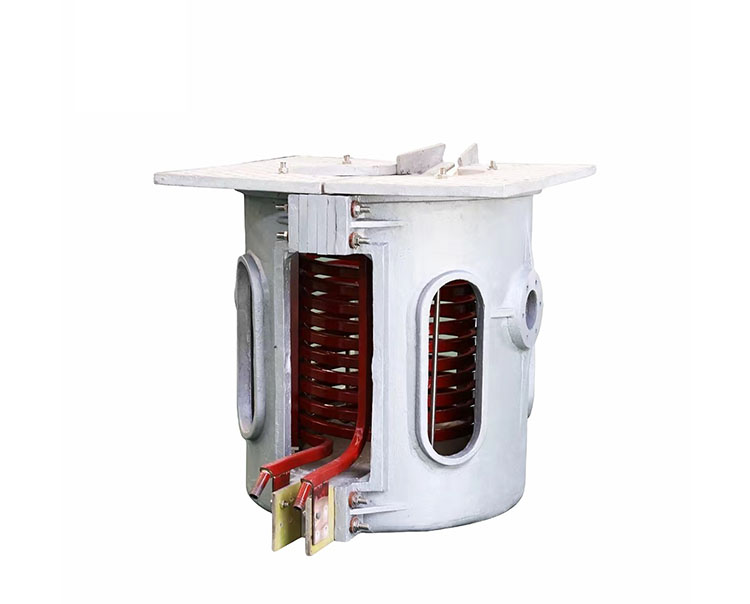
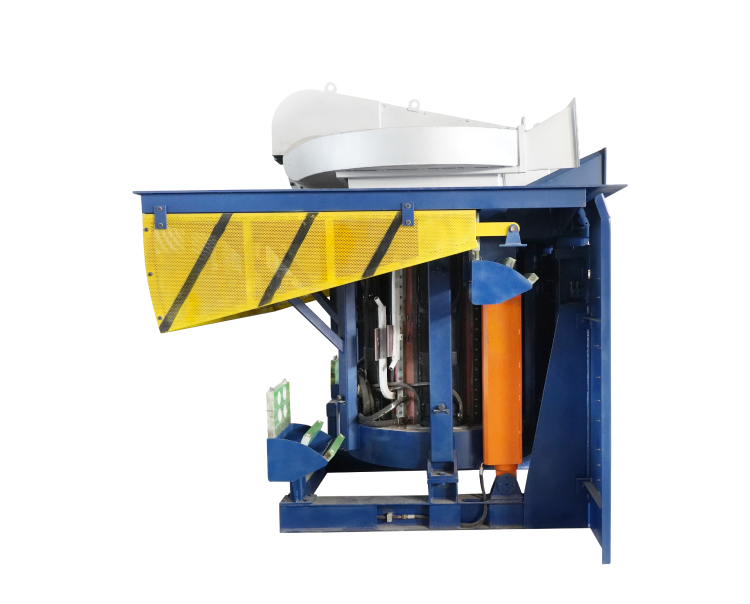
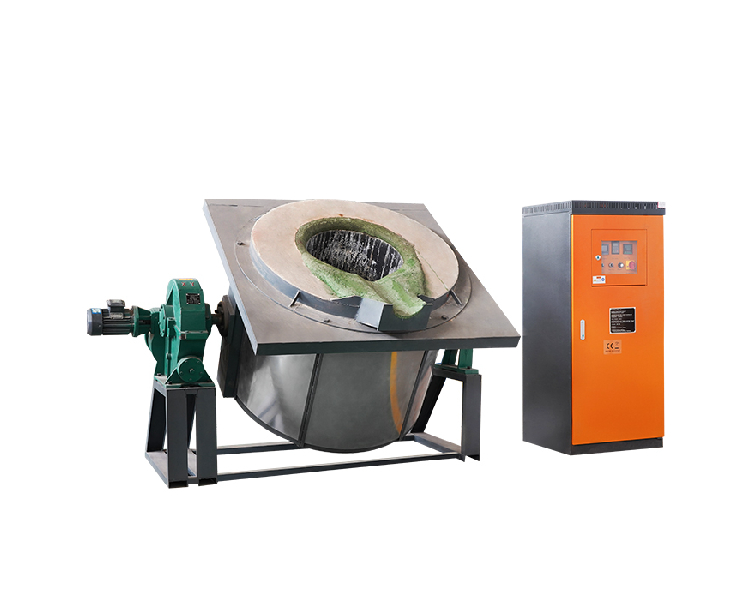
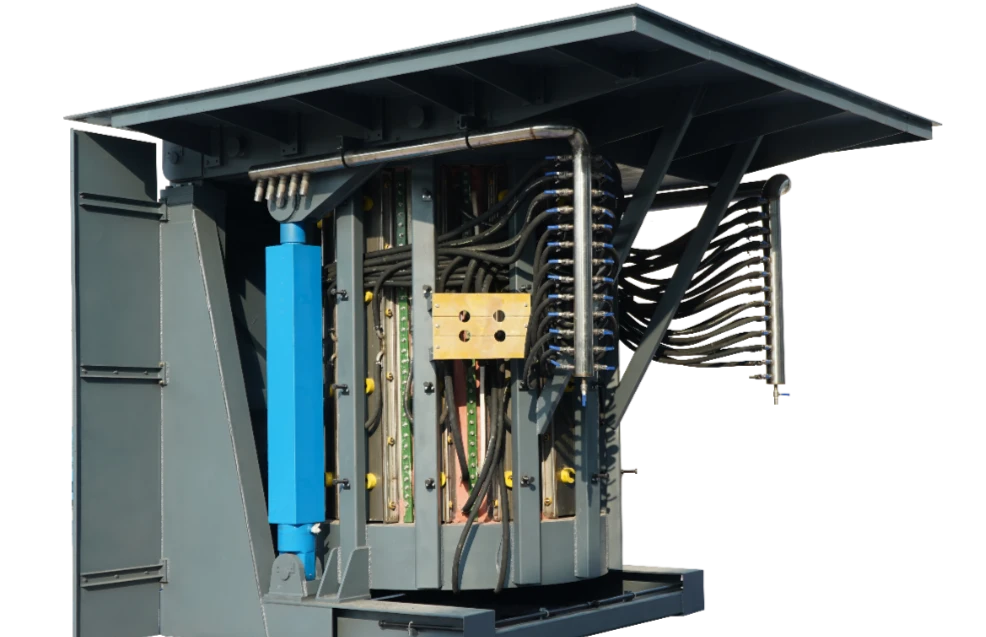
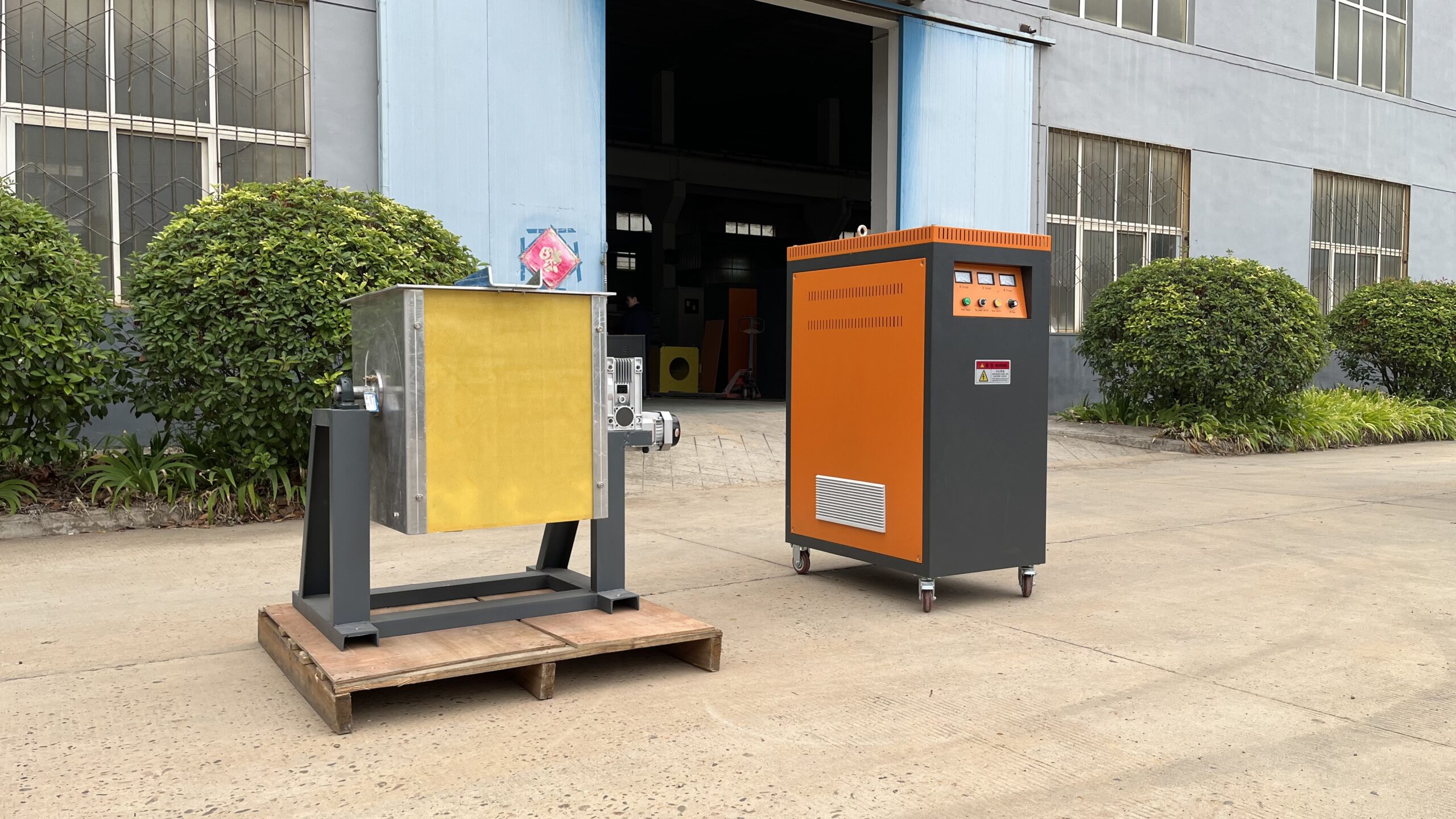
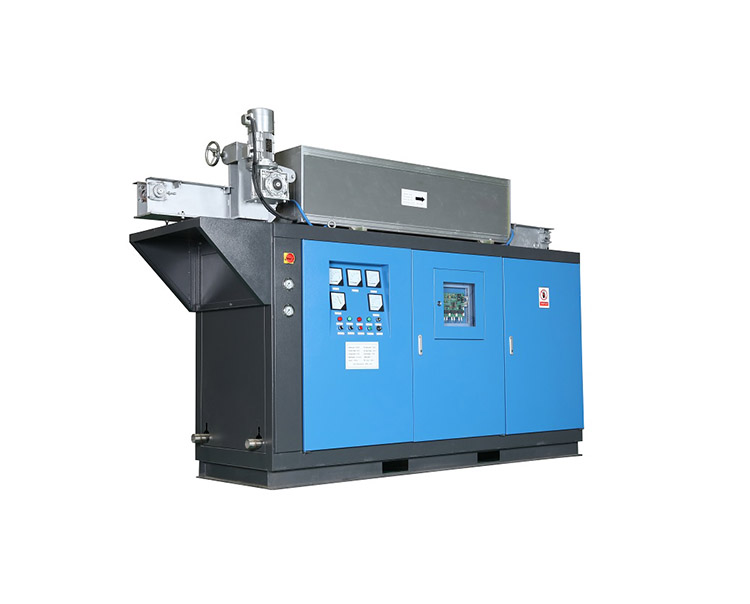
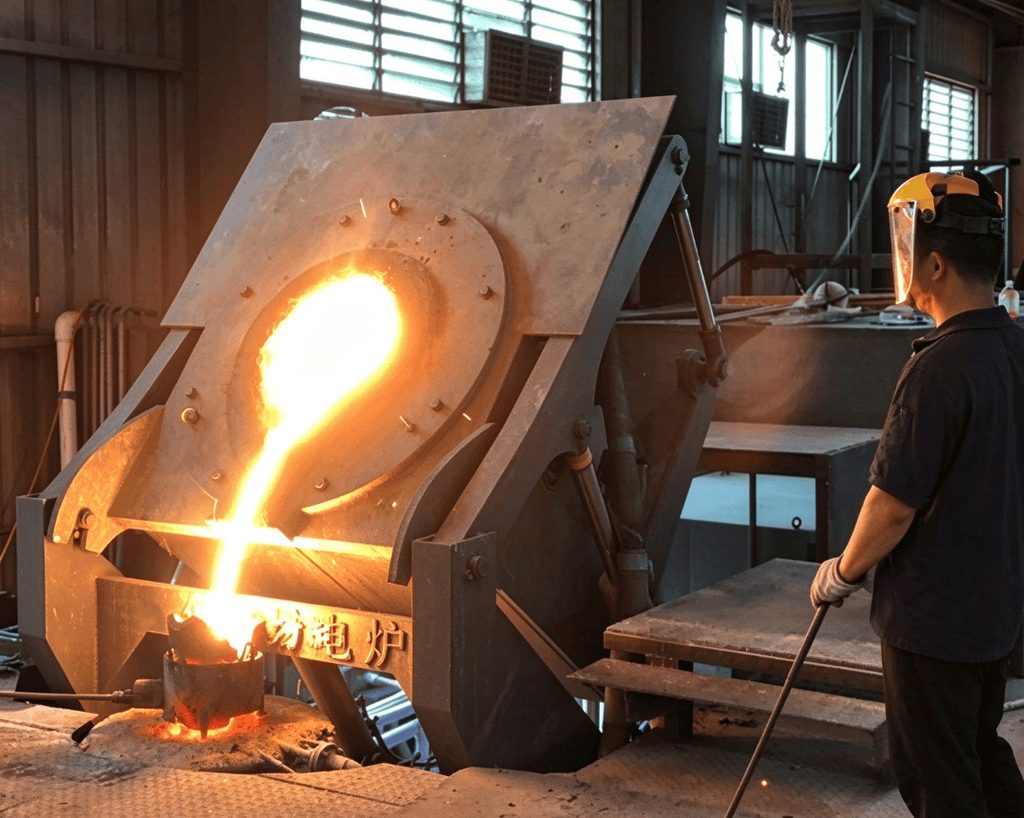
For steel casting plants, stainless foundries, and producers running 0.5 to 30 tonnes per heat, the medium frequency induction furnace is the practical choice:
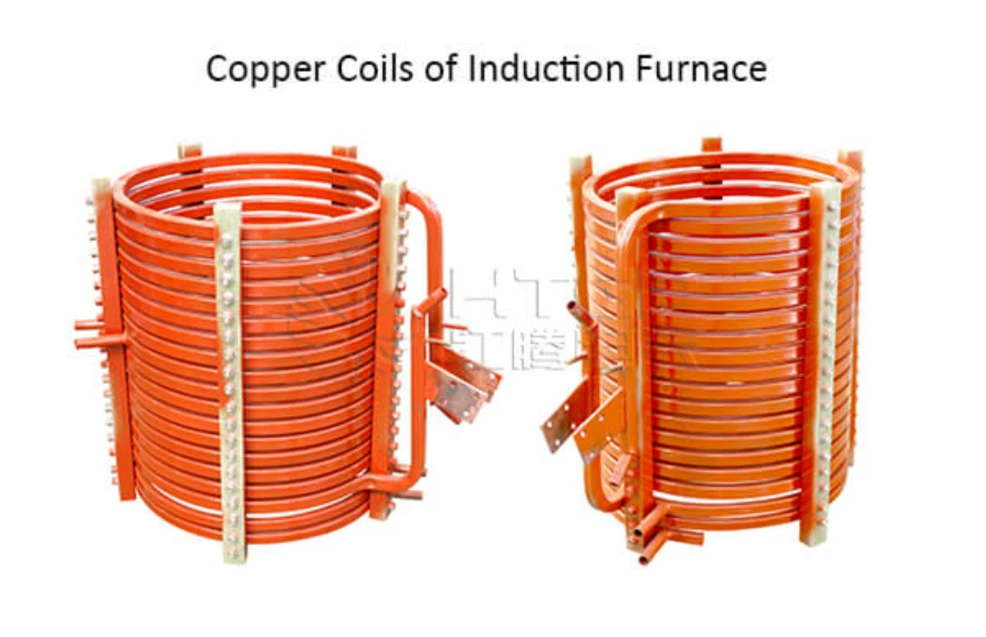
- Heat is generated inside the metal by eddy currents — high electrical efficiency and fast response
- Electromagnetic stirring homogenizes temperature and chemistry across the bath
- Precise temperature control — hold a melt at 1,600 °C without the overshoot a combustion furnace gives you
- Clean operation — no electrodes, no combustion products, no oxidation from flame contact
- Chemistry from the charge — weigh your scrap and alloys, and the bath reproduces your target grade heat after heat
That last point is exactly what a cupola cannot deliver, and it is why an induction furnace is the standard upgrade path when an iron foundry adds a steel line. (See our dedicated guide: induction furnace for steel melting.)
When to Keep the Cupola — and When to Switch
Keep the cupola when:
- Your product is grey, ductile, or malleable iron castings
- You value low fuel cost per tonne over emissions control
- You tolerate the coarse temperature and carbon levels cast iron allows
Switch (or add) when:
- Your product is carbon steel, alloy steel, or stainless steel
- You need repeatable chemistry, not “whatever the coke ratio gives”
- You face tightening air-quality rules — cupola flue gas is expensive to clean
Many foundries run both: the cupola for iron tonnage, a medium frequency induction furnace for steel and special alloys. The economics are usually clean because the two furnaces do not compete for the same product.
If You’re Melting Steel, Choose the Furnace That Controls the Melt
When you compare induction furnaces for steel melting, look beyond the price tag. Evaluate:
- Melt rate and specific energy — kWh per tonne of steel, measured on your scrap mix, not on the brochure
- Capacity and power match — your tap-to-tap cycle should match your casting or pouring schedule
- Refractory and lining life — steel service is harder on lining than iron
- Stirring and automation — bath uniformity and repeatability grade after grade
- Engineering support — power supply, water cooling, and plant layout are part of the machine
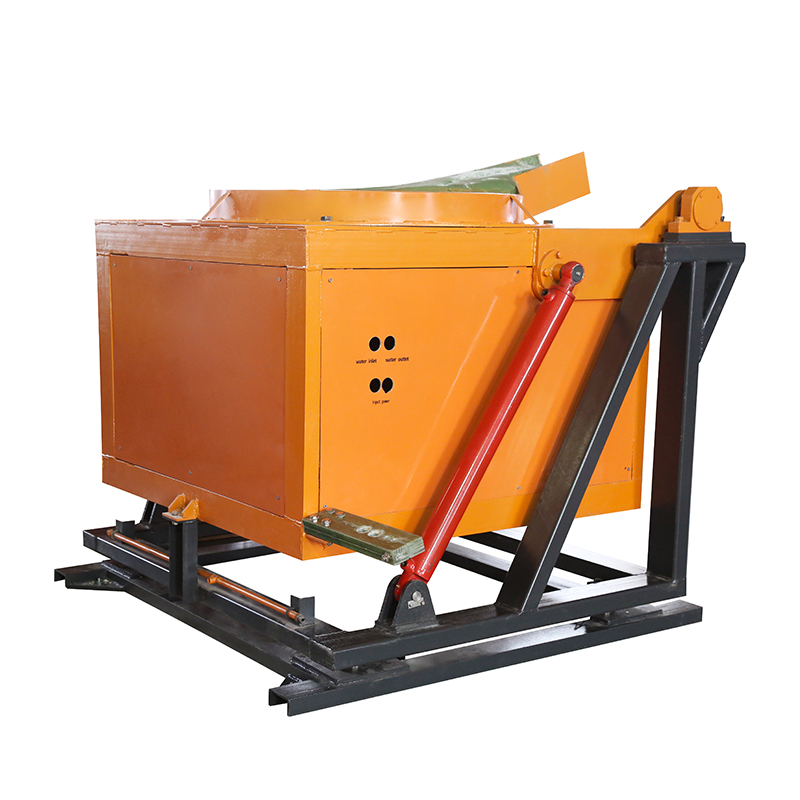
This is where working with the manufacturer directly pays off. MeltingTech builds medium frequency melting furnaces for steel and alloy service. Our two-in-one design lets a single IF power supply drive two furnaces with free power allocation — one melts while the other pours or holds — which saves one transformer and cuts total installed capacity by about 20%. Power factor stays at 95% or above, and high-order harmonics meet grid standards. Steel shell furnaces (from 1 t up) are welded from high-quality carbon steel with a hydraulic tilting mechanism and a magnetic yoke shielding layer around the induction coil for efficiency, safety, and stability in steel service; units start at workshop scale (GWS-0.5T) and scale up for foundry production. We also provide full plant design and electrical engineering — because the layout, power supply, and cooling loop around the furnace decide whether it meets its rated output.
Get a Quote or email us at info@lyheater.com to discuss your steel melting line.
Frequently Asked Questions
Can steel be melted in a cupola furnace?
No — not to produce steel. Steel scrap added to a cupola charge melts, but the output is cast iron with 2.5–4% carbon. A cupola cannot control carbon below about 2%, cannot reach steel tapping temperatures of 1,550–1,650 °C, and has no refining stage. For molten steel, use an EAF, BOF, or medium frequency induction furnace.
Why is a cupola furnace not used for steel?
Because steel chemistry requires carbon control below ~2%, stable high temperature, and refining — three capabilities a coke-fired cupola does not have. It carburizes the melt, taps too cold for steel, and burns alloying elements unpredictably.
What is a cupola furnace used for?
It melts grey, ductile, and malleable cast iron in foundries. Coke and iron are charged in layers and melted continuously, which makes it a low-cost, high-throughput melter for iron castings.
What is the best furnace for melting steel scrap?
For foundry-scale production (0.5–30 t), a medium frequency induction furnace offers precise temperature control, electromagnetic stirring, and clean operation. For mini-mill scale (50 t+ per heat), an electric arc furnace is the industry standard.
How hot is molten steel?
Commercial steel grades melt between roughly 1,370 °C and 1,540 °C, and are tapped with superheat at about 1,550–1,650 °C for casting. See our guide on how hot is molten steel for grade-by-grade detail.
Related Reading
- Induction furnace for steel melting — capacities, melt rates, and what a steel line actually needs
- Electric arc furnace vs induction furnace — choosing between the two electric routes
- How to melt stainless steel — stainless chemistry is even less forgiving than carbon steel
- How hot is molten steel — tap temperatures and superheat explained