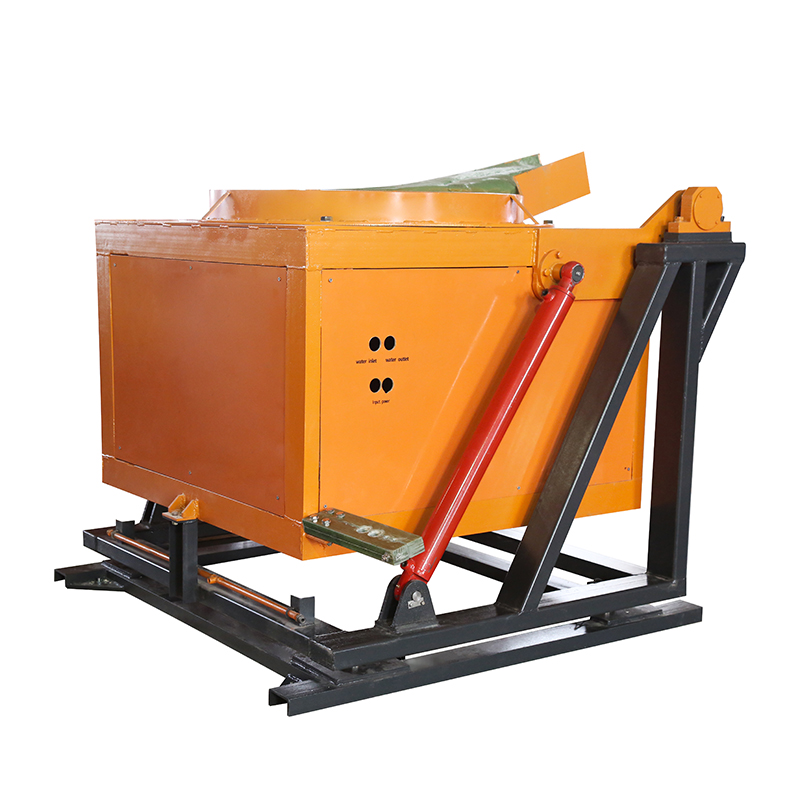
In modern metal processing and foundry production, induction furnaces have become one of the most widely used melting technologies for steel, aluminum, copper, cast iron, and other conductive metals. Compared with traditional fuel-fired furnaces, an induction furnace does not rely on combustion to generate heat. Instead, it uses electromagnetic energy to directly heat the metal charge, achieving fast melting, high energy efficiency, and precise temperature control.
Understanding how an induction furnace works is essential for foundry operators, metallurgical engineers, and equipment buyers who need to select the right melting solution. From power input and electromagnetic induction to eddy current heating and molten metal pouring, every stage of the process affects melting efficiency, energy consumption, and final metal quality.
This article explains the complete working principle of an induction furnace, its internal structure, and why this technology has become the preferred choice for modern industrial metal melting.
What Is an Induction Furnace?
An induction furnace is an electrical melting furnace that uses electromagnetic induction to generate heat directly inside the metal charge. Unlike gas-fired or resistance furnaces, the heat source is not transferred from an external heating element. Instead, the metal itself becomes the heating source through induced electrical currents.
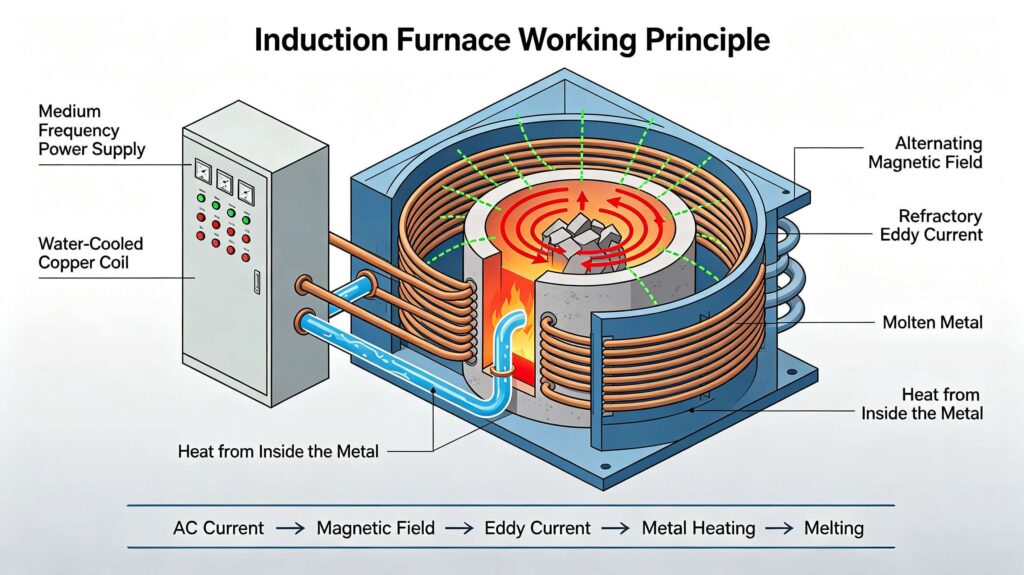
The basic working process is:
Electrical energy → Magnetic field generation → Eddy current induction → Metal resistance heating → Metal melting
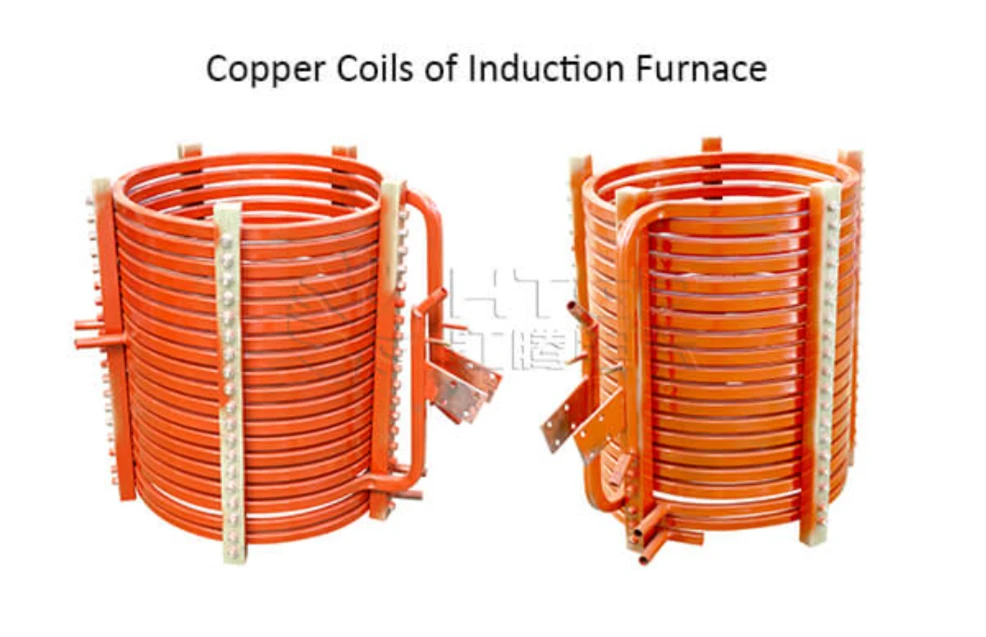
When alternating current passes through a copper induction coil, it creates a changing magnetic field. This magnetic field penetrates the metal placed inside the furnace and generates electrical currents within the material. Due to the electrical resistance of the metal, these currents produce heat, causing the material to gradually melt.
Because heat is generated directly inside the metal, induction furnaces provide faster heating, lower oxidation loss, and better temperature uniformity compared with many traditional melting methods.
How Does an Induction Furnace Work?
The working principle of an induction furnace is based on two fundamental physical phenomena:
- Electromagnetic induction
- Joule heating caused by eddy currents
The induction system converts electrical energy into electromagnetic energy and finally into thermal energy inside the metal charge.
The complete melting process includes several steps:
- The power supply converts electrical energy into medium-frequency or high-frequency alternating current.
- The alternating current flows through the induction coil and creates a changing magnetic field.
- The magnetic field penetrates the metal charge inside the furnace.
- Eddy currents are generated inside the metal.
- The electrical resistance of the metal converts these currents into heat.
- The metal temperature increases until melting occurs.
The following section explains the physical principles behind this process in detail.
Core Principles of Induction Furnaces: Electromagnetic Induction + Joule Heating (Eddy Current Heating)
Simply put: an alternating magnetic field directly induces an electric current within the metal charge, causing it to heat up and melt on its own—without the need for an open flame or for electrodes to come into contact with the material.
Fundamental Physical Principles (Faraday’s Law of Electromagnetic Induction, Eddy Current Effect, Skin Effect)
An alternating current is passed through the induction coil (copper coil).
When medium-frequency or high-frequency alternating current flows through the coil, a rapidly alternating magnetic field is generated around it.
This alternating magnetic field passes through the metal charge (conductors such as steel, aluminum, copper, and iron) inside the furnace chamber.
According to the principle of electromagnetic induction, closed induced currents—known as eddy currents—are generated within the metal.
These eddy currents flow within the metal, generating heat through the metal’s own electrical resistance (I²R heating).
The metal heats up on its own, warming from the inside out and melting; note that this heat is not transferred from the coil.
Key distinction: The coil itself only generates the magnetic field; it is water-cooled and does not heat the workpiece.
Additional effect: Skin effect
Eddy currents are concentrated in the surface layer of the metal; the higher the frequency, the thinner the heated layer.
High-frequency induction furnaces: Suitable for surface hardening and melting small parts
Medium-frequency induction furnaces: The mainstream method for metal melting (aluminum, steel, and cast iron melting; the industry standard for industrial melting)
Structure of a Medium-Frequency Induction Melting Furnace
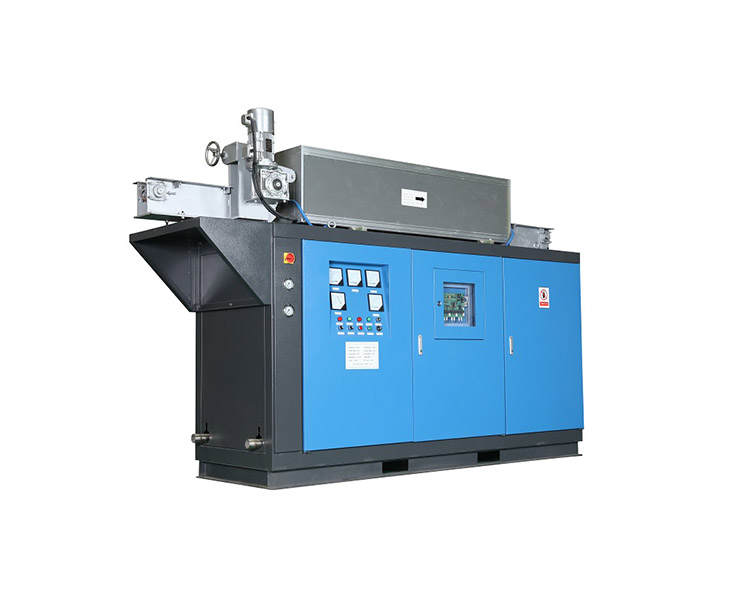
Among different types of induction furnaces, the medium-frequency induction melting furnace is the most common solution for industrial metal melting applications. It is widely used for melting aluminum, steel, stainless steel, copper, and cast iron because it provides a good balance between melting depth, efficiency, and production capacity.
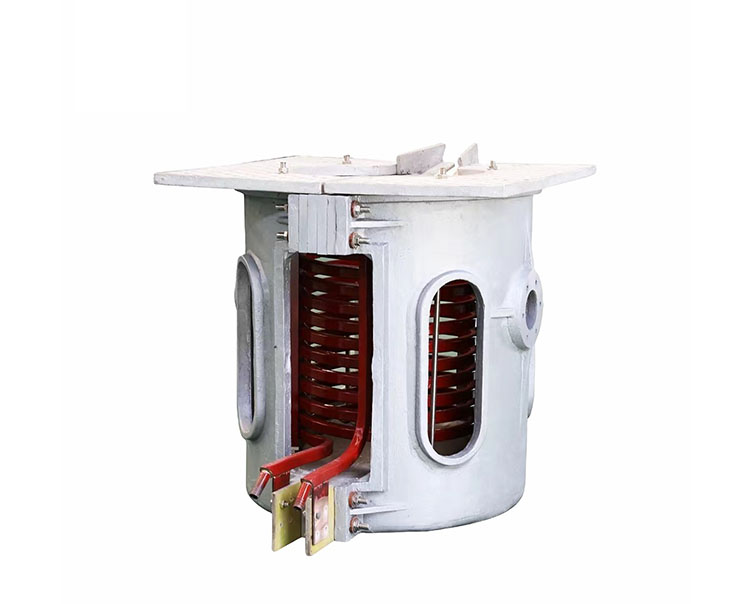
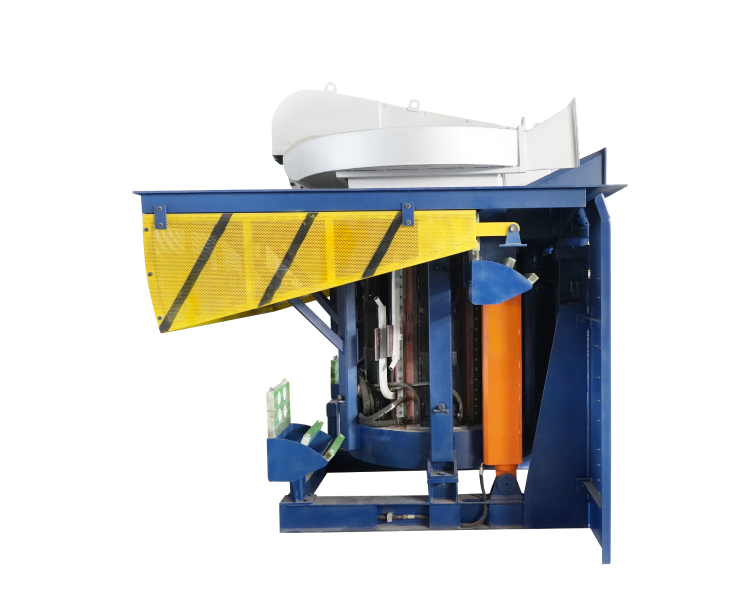
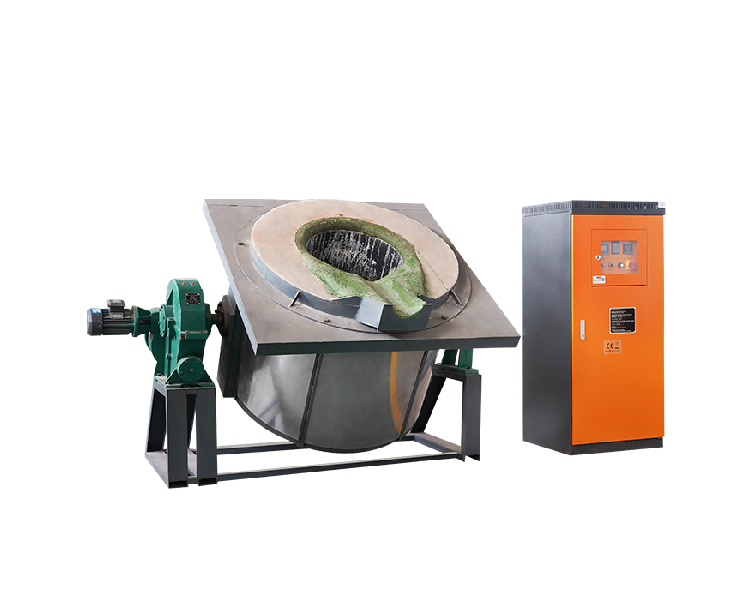
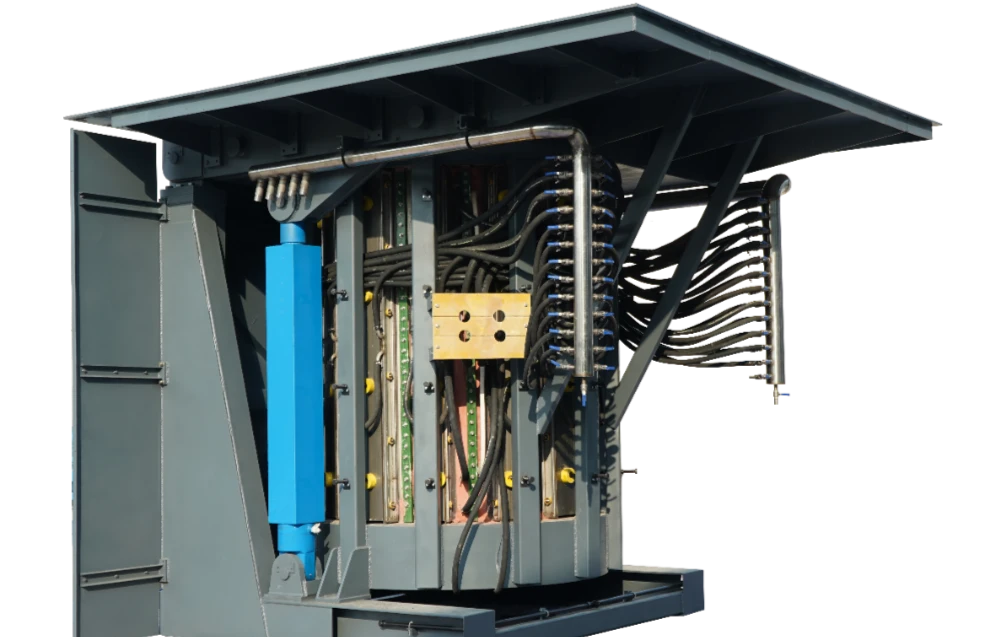
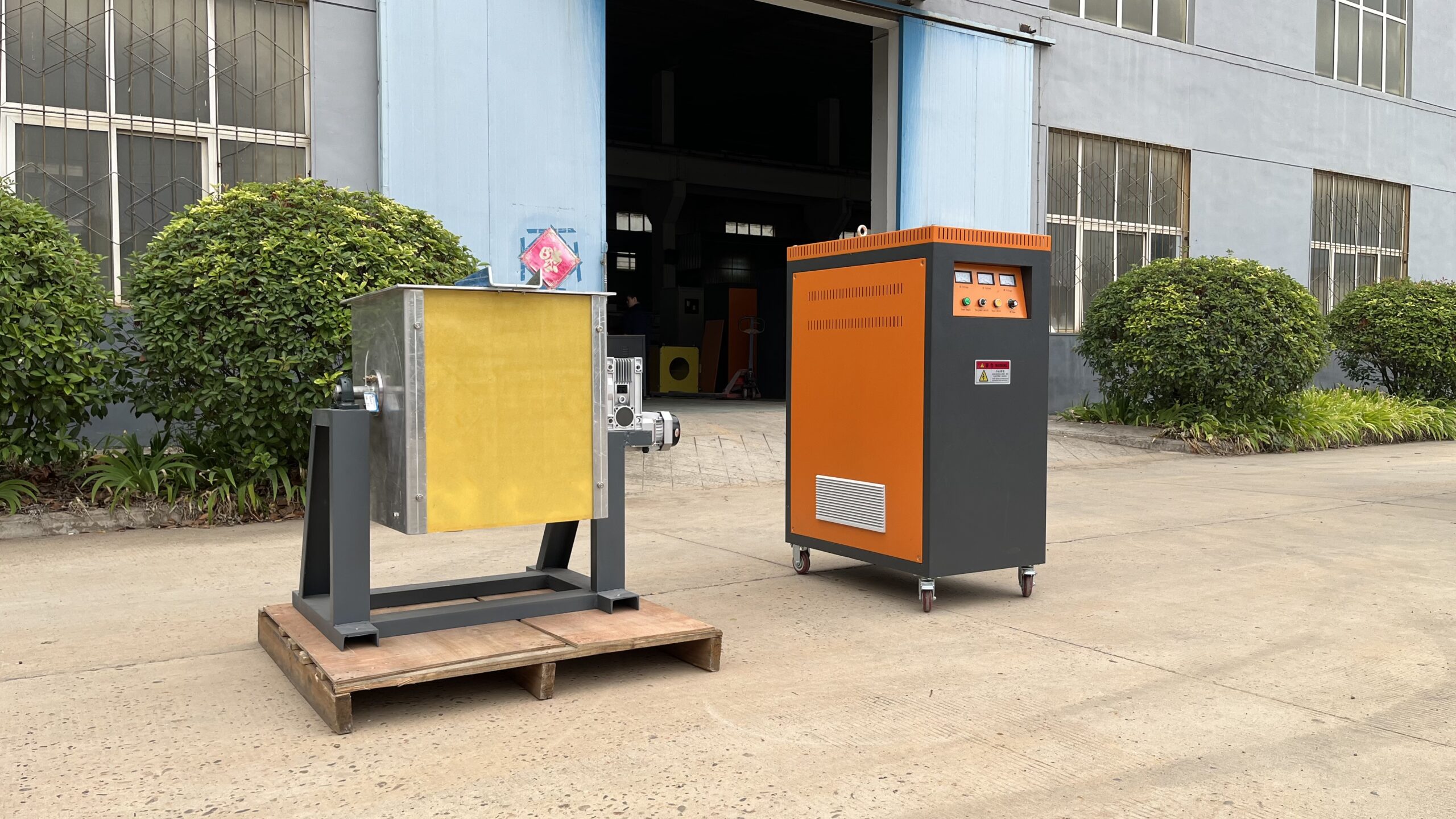
A complete induction melting system mainly consists of the power supply system, induction coil, crucible, furnace body, and cooling system.
Structure of a Medium-Frequency Induction Melting Furnace (Most Common, for Aluminum/Steel Melting)
The complete system consists of 5 major components:
Power control cabinet (medium-frequency power supply)
Converts power-frequency AC (380V/50Hz) into DC, then rectifies it back into medium-frequency AC (200–8000Hz) to supply the induction coil.
Induction Coil (wound from hollow red copper tubing)
Circulating cooling water flows through the hollow copper tubing to prevent the coil from burning out due to high temperatures.
Crucible
Placed inside the coil to hold the metal feedstock:
Melting steel: Magnesia refractory crucible
Melting aluminum: Graphite crucible / Refractory aluminum crucible
Furnace Tilting Mechanism
Hydraulic cylinders or an electric motor tilt the furnace to pour out the molten metal.
Water-Cooling System
Continuously cools the induction coil and power supply capacitors; the entire system must be water-cooled.
Why Can an Induction Furnace Melt Metal Efficiently?
The main advantage of an induction furnace is that energy is generated directly inside the metal rather than transferred through combustion or external heating elements.
This direct heating method provides several important benefits:
Faster melting speed
Because heat is produced inside the metal charge, the energy transfer process is highly efficient. The furnace can quickly increase metal temperature and reduce melting time.
Higher temperature control accuracy
The power output can be adjusted precisely according to melting requirements, allowing operators to maintain stable molten metal temperatures.
Lower metal oxidation loss
Since there is no direct flame contact with the metal surface, oxidation and contamination risks are reduced, which is especially important for aluminum and alloy production.
Better melting quality
The electromagnetic stirring effect generated during induction melting helps improve chemical composition uniformity and reduces temperature differences inside the molten pool.
Medium Frequency vs High Frequency Induction Furnace Applications
The operating frequency of an induction furnace directly affects heating depth because of the skin effect.
Medium Frequency Induction Furnace
Medium-frequency induction furnaces are mainly used for industrial metal melting.
Typical applications include:
- Steel melting
- Stainless steel melting
- Aluminum melting
- Copper melting
- Cast iron melting
The lower frequency allows deeper penetration of electromagnetic energy, making it suitable for larger metal charges and higher production capacities.
High Frequency Induction Furnace
High-frequency induction furnaces generate stronger surface heating effects.
They are mainly used for:
- Surface hardening
- Small component heating
- Precision heating applications
The higher frequency concentrates heating closer to the metal surface, making it suitable for localized thermal treatment.
Complete Metal Melting Process in an Induction Furnace
The complete operation process of an induction furnace usually includes the following stages:
1. Charging
Metal raw materials such as steel scrap, aluminum scrap, ingots, or alloy materials are loaded into the crucible.
2. Electromagnetic Heating
After the power supply starts, alternating current flows through the induction coil and creates a magnetic field. Eddy currents begin forming inside the metal charge, generating heat.
3. Melting and Temperature Control
As the temperature rises, the metal gradually changes from solid to liquid. The operator adjusts power output to achieve the required melting temperature.
4. Metallurgical Treatment
Depending on the application, additional processes such as alloy adjustment, slag removal, or refining may be performed.
5. Pouring
After reaching the required temperature and composition, the furnace tilting mechanism pours molten metal into molds or casting equipment.
Key Factors Affecting Induction Furnace Performance
Although the working principle of induction furnaces is relatively simple, actual melting performance depends on several factors:
Furnace Power Capacity
The power rating determines melting speed and production capacity. Higher-power systems are suitable for large-scale foundry operations.
Operating Frequency
Frequency selection affects electromagnetic penetration depth and heating efficiency.
Coil Design
The induction coil design influences magnetic field distribution and energy transfer efficiency.
Cooling System Reliability
Because the induction coil and electrical components operate under high current conditions, an effective water-cooling system is essential for stable operation.
Crucible Material
Different metals require different refractory materials. Proper crucible selection improves furnace life and prevents contamination.
Why Induction Furnaces Are Widely Used in Modern Foundries
With increasing requirements for energy efficiency, environmental protection, and metal quality, induction furnaces have become a preferred melting solution across many industries.
Compared with traditional combustion furnaces, induction technology offers:
- High electrical-to-heat conversion efficiency
- Faster melting cycles
- Cleaner working environment
- Accurate temperature control
- Reduced material loss
- Flexible operation for different metals
For foundries producing steel castings, aluminum components, copper alloys, and special alloys, induction melting provides a reliable balance between productivity and metal quality.
Conclusion
An induction furnace works by using electromagnetic induction and Joule heating to generate heat directly inside the metal charge. The induction coil creates an alternating magnetic field, which produces eddy currents inside conductive metals. These currents generate heat through electrical resistance, allowing the metal to melt efficiently without direct flame heating.
From the power supply and induction coil to the crucible and cooling system, every component plays an important role in ensuring stable melting performance. Understanding the working principle of an induction furnace helps manufacturers choose the right equipment, optimize energy consumption, and achieve better casting results.